Long-Endurance Drone Platform With Power-Line-Level Obstacle Sensing
Engineered for Excellence, Designed for Versatility
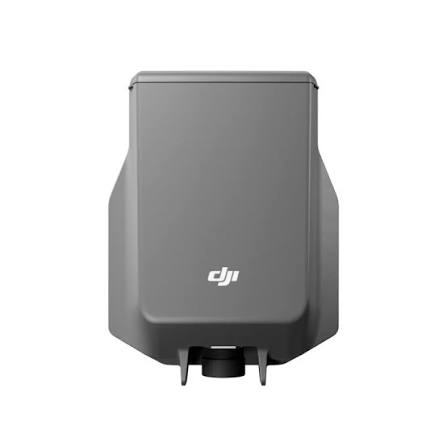
DJI AP100 Parachute For the Priceless Below. Available from aerosmart, Authorised DJI Dealer
Authorised DJI Dealer Genuine Product, Full Warranty
EASA C5/C6 And CAA UK5/UK6 Compliant Enables Operations Over Populated Areas
Compatible With DJI Matrice 400 Exclusively
Delivery Across 14+ Countries With Export Documentation
The DJI AP100 Parachute is the safety system that makes the DJI Matrice 400 compliant with the most stringent European and UK drone operational regulations, enabling flights over populated urban areas and Beyond Visual Line of Sight (BVLOS) operations that would otherwise be prohibited without a certified parachute system in place.
When an enterprise drone the size and weight of the Matrice 400 experiences a critical system failure at altitude, the consequences for the ground below are determined entirely by how fast and how reliably the aircraft's descent can be controlled. The AP100 addresses this with a response time under 600 milliseconds from fault detection to parachute deployment, and a stabilised descent rate below 5 m/s, reducing the kinetic energy of a fully loaded Matrice 400 to a level that significantly reduces the severity of any ground impact event.
Two deployment modes—automatic deployment triggered by flight anomalies and manual deployment via app or Flight Termination System (FTS)—are supported by an independent power system and full-link redundancy that operate completely separately from the aircraft's primary power and communication systems. If the aircraft's main systems fail entirely, the parachute system continues operating on its own backup power for approximately one hour and deploys based on its own independent flight termination control link.
Aerosmart supplies and supports the DJI AP100 Parachute as an authorised DJI dealer across 14+ countries. Our team will ensure you receive the right configuration, regulatory compliance guidance, and full support from day one.
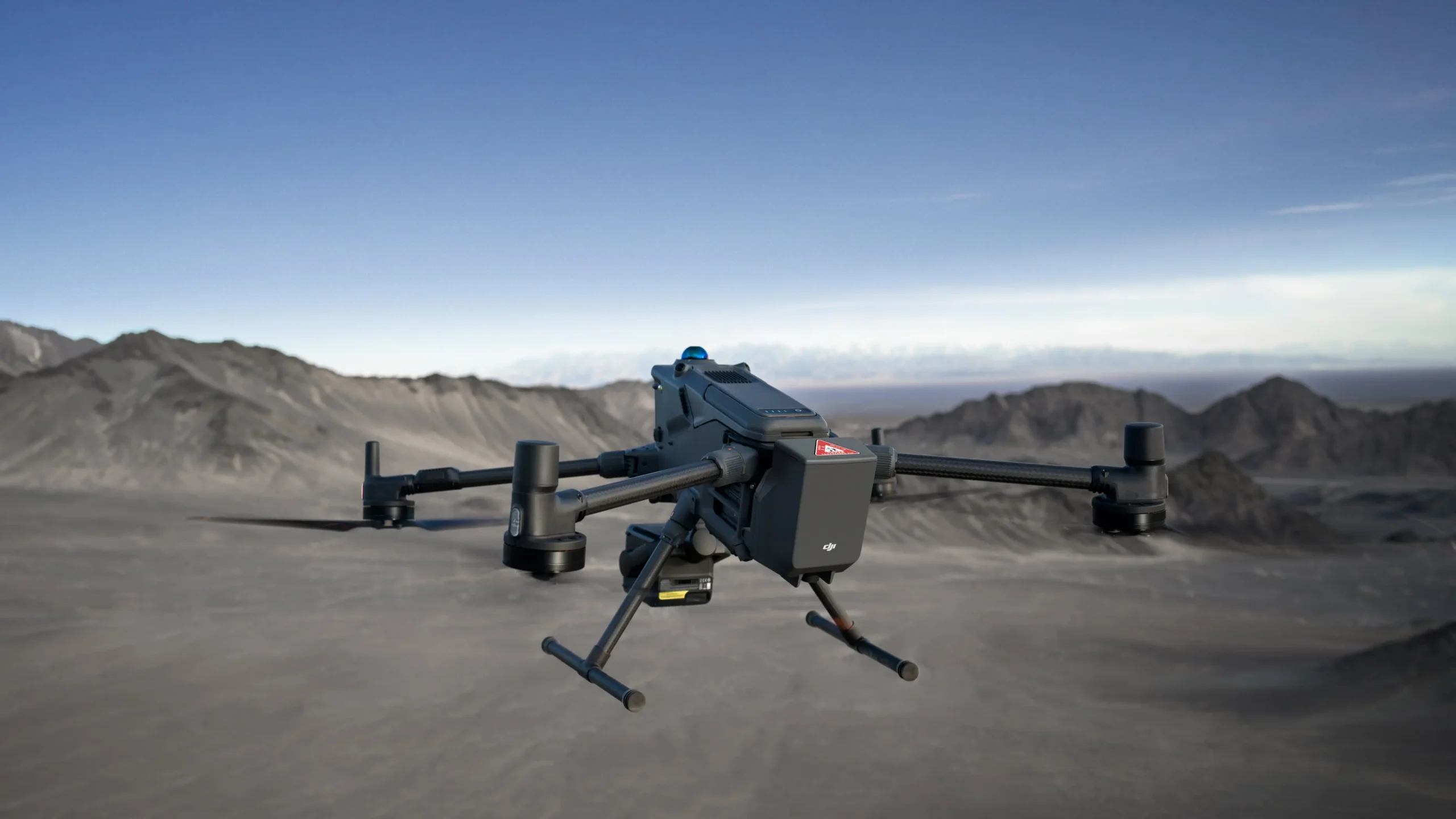
Performance, protection, payload, and software compatibility at a glance.
EASA C5/C6 · CAA UK5/UK6 – Enabling Operations Over People
When paired with the DJI AP100 Parachute, the DJI Matrice 400 meets the European Union Aviation Safety Agency (EASA) C5 and C6 operational safety requirements and the UK Civil Aviation Authority (CAA) UK5 and UK6 classifications. These compliance certifications are the regulatory gateway to commercial drone operations that are otherwise inaccessible to an aircraft of the Matrice 400's weight class.
EASA Standard Scenario STS-01 permits flights over populated urban areas—the congested, built-environment operations that public safety agencies, infrastructure inspection teams, and emergency response operators in European and UK-regulated jurisdictions require. Without this certification, drone platforms above the defined weight threshold cannot legally conduct these operations without specific individual authorisation, adding significant time, cost, and administrative complexity to every deployment.
EASA Standard Scenario STS-02 permits Beyond Visual Line of Sight (BVLOS) operations—the operational capability that enables autonomous dock-based monitoring, long-range inspection corridor coverage, and continuous aerial intelligence programmes requiring the aircraft to operate beyond the pilot's direct visual observation range.
For Aerosmart clients operating within European or UK-regulated jurisdictions—including energy companies, mining operators, infrastructure businesses, and public safety agencies—the DJI AP100 Parachute is the hardware that makes DJI Matrice 400 deployment in those jurisdictions legally straightforward rather than individually negotiated.
Independent Power. Independent Control. Independent Rotor Stop.
The DJI AP100 Parachute's safety architecture is built on a principle that every critical aviation safety system follows—independence. The parachute system's power, communication, and control functions operate entirely separately from the aircraft's primary systems, ensuring that the failure mode triggering the parachute does not simultaneously disable the system designed to respond to it.
Independent Power – Approx. 1 Hour Backup
The AP100 carries its own independent power supply that maintains full parachute system functionality for approximately one hour after the aircraft's primary power system fails or is disconnected. If the DJI Matrice 400 experiences a total power system failure—the failure mode that eliminates control authority and sends the aircraft into uncontrolled descent—the AP100's independent power supply activates immediately, maintaining the ability to detect the flight anomaly and deploy the parachute without any dependency on the aircraft's primary power.
The backup power duration of approximately one hour provides sufficient time to cover the full descent from any operational altitude within the AP100's effective deployment range, with substantial margin between fault detection and ground contact.
Full-Link Redundancy
The AP100 maintains independent communication and control links that function separately from the aircraft's primary control link. If the primary link between the remote controller and the aircraft is lost—creating a flyaway or uncontrolled aircraft scenario—the AP100's independent Flight Termination System (FTS) link remains active and capable of receiving manual deployment commands through DJI FlightHub 2's FTS interface or the physical app-based deployment control.
Independent control and rotor stop links allow the AP100 to command the DJI Matrice 400's motors to stop before parachute deployment, eliminating the rotor strike risk that would otherwise exist if the parachute deployed into spinning propellers. The rotor stop command and parachute deployment are coordinated through the independent FTS architecture, not through the aircraft's primary flight controller that may have failed.
Continuous Self-Check
The AP100 continuously monitors the status of the gas generator and communication links throughout every flight, displaying system health alerts via the DJI Pilot 2 Health Management System (HMS) interface before issues develop into deployment failures. This enables pre-flight and in-flight awareness of parachute system status, allowing operators to make informed go/no-go decisions based on actual system health rather than assumptions.
The AP100 deploys automatically when it detects abnormal aircraft attitude or speed, indicating a loss-of-control event that requires immediate emergency descent intervention.
Its automatic deployment response time is under 600 milliseconds from anomaly detection to gas generator activation. This rapid response reduces the altitude lost between the aircraft failure and the moment the parachute begins slowing the descent.
The system responds faster than a human operator could identify the failure, access the manual deployment control, and activate the parachute.
Automatic deployment includes a proximity exclusion zone. Deployment is disabled when the aircraft is within a 10-metre radius of the Home Point and its relative altitude is within 15 metres above or below the Home Point.
This prevents automatic parachute deployment during takeoff and landing, when the aircraft is close to the ground and deployment could create more risk than a controlled landing. Outside this exclusion zone, automatic deployment remains active throughout the flight.
Geocaging-triggered automatic deployment is supported in EASA and CAA UK member states. The parachute can deploy automatically if the aircraft exits a predefined geographic boundary, supporting BVLOS operational compliance.
Manual deployment is available through the DJI Pilot 2 app at any point during flight. This allows the pilot to deploy the parachute when a developing situation requires intervention before automatic anomaly detection is triggered.
The Flight Termination System manual deployment route is also supported through DJI FlightHub 2 in EASA and CAA UK member states. Remote operations teams can command deployment directly through the FlightHub 2 FTS interface.
After landing, the physical button on the deployed parachute can be used to silence the audible and visual alarms once the ground team has located the aircraft.
The two specifications that determine the AP100's operational effectiveness are its stabilised descent rate and effective deployment altitude. Together, these figures define the speed reduction and minimum altitude required for the parachute to deliver its rated performance in field conditions.
Once the DJI AP100 Parachute has deployed and the aircraft has landed, the post-deployment phase begins—locating the aircraft, retrieving the payload, and assessing the condition of the equipment for inspection and reuse decisions.
The AP100 activates audible and visual alarms immediately upon deployment that continue for approximately one hour after landing, providing the navigation cue that recovery teams need to locate the aircraft in low-visibility environments, at night, in dense vegetation, on water, or in other situations where the aircraft has landed outside direct visual observation.
The alarms operate using the AP100's independent backup power supply. The same power system that maintains parachute control during flight also maintains alarm functionality after landing, completely independent of the aircraft's primary power system.
If the aircraft's batteries are damaged, depleted, or disconnected during the incident that triggered deployment, the AP100 continues operating its alarms for approximately one hour, helping recovery teams locate the aircraft without relying on the drone's onboard power.
The physical button on the parachute unit silences the audible and visual alarms once the ground team reaches the aircraft, enabling a controlled and quiet recovery without requiring the DJI Pilot 2 app, remote controller, or any additional interface to deactivate the alarm function.
Dust and Water Protection
Minimum Operating Temperature
Maximum Operating Temperature
Maximum Operating Altitude ASL
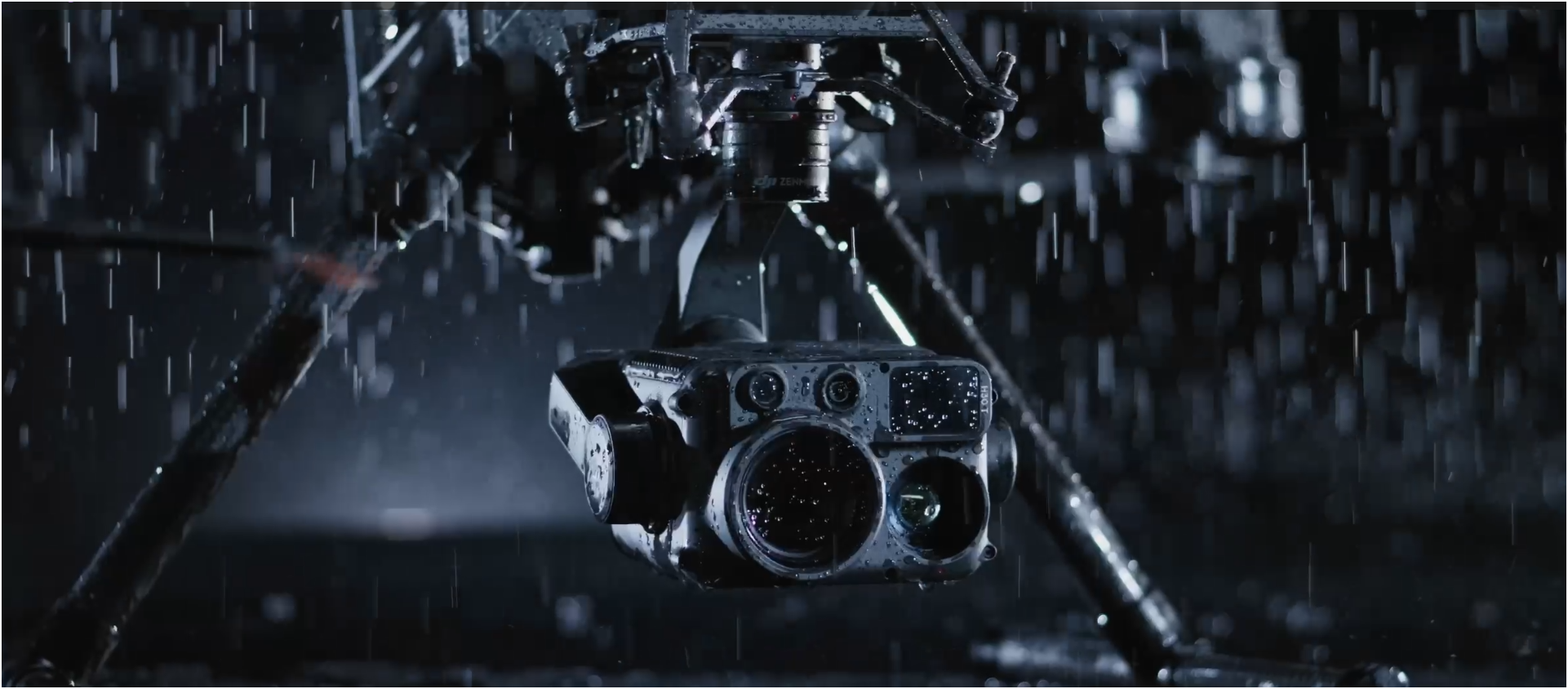
The AP100 remains installed on the Matrice 400 and is designed to withstand continuous exposure throughout demanding professional deployments.
The AP100 carries an IP55 protection rating, providing protection against dust ingress and water jets from any direction. Its parachute housing and internal electronics maintain reliable performance through the dust, rain, humidity, and mixed environmental conditions encountered during professional field deployments.
The operating temperature range of -20°C to 50°C supports deployments across a broad spectrum of professional conditions. This includes cold-weather missions in high-altitude mountainous terrain and high-temperature operations around industrial facilities, desert regions, and tropical environments.
IP55 protection is especially important because the AP100 is permanently installed on the aircraft. Unlike removable payloads that can be stored between missions, the AP100 is exposed to every environmental condition experienced by the Matrice 400. It is engineered to withstand repeated exposure across seasons and climates without environmental degradation compromising deployment reliability.
The operating altitude range of 0 to 4,500 metres ASL extends the AP100’s deployment envelope to high-altitude survey, mapping, and infrastructure inspection missions. The parachute remains operationally viable across the altitudes where most professional Matrice 400 deployments take place.
As an authorised DJI dealer, aerosmart provides genuine AP100 systems, regulatory compliance guidance, international delivery, installation support, servicing, and competitive enterprise pricing.
Every DJI AP100 supplied by aerosmart includes original DJI warranty, current firmware certification, and regulatory-compliant documentation. The AP100's compliance value depends on genuine, authorised certification. Counterfeit or non-authorised parachute systems do not satisfy EASA C5/C6 requirements, regardless of their physical specifications.
Our team advises on C5/C6 and STS-01/STS-02 operational documentation, AP100 installation and commissioning procedures, and the regulatory filing processes required to convert certified AP100 hardware into operational authorisation within each jurisdiction.
aerosmart provides direct international shipping with complete export documentation, destination-specific import guidance, and assistance with customs and duty requirements for every supported market.
Our Dubai-based technical team provides AP100 installation guidance, DJI Pilot 2 Health Management System integration, Flight Termination System configuration for FlightHub 2, firmware assistance, and hardware maintenance throughout the operational life of the system.
aerosmart supports the correct installation, system verification, and commissioning of the AP100 on the DJI Matrice 400, helping operators configure safety functions and prepare the aircraft for compliant professional deployment.
Contact aerosmart for DJI AP100 pricing and complete Matrice 400 plus AP100 system quotations, including installation support, regulatory compliance documentation guidance, and enterprise deployment configurations.
Every DJI AP100 Parachute purchased through aerosmart comes with access to DJI Care Enterprise Plus, covering the accessory from its activation date.
All DJI Care Enterprise Plus activations and warranty claims are handled directly by aerosmart, with no overseas routing and no third-party intermediaries.
Unlimited free repairs within the available coverage limit for the full duration of the plan.
A shared coverage limit across your entire fleet, supporting professional multi-unit operations.
Mail-in repair services include two-way shipping, with no hidden logistics costs.
DJI-certified engineers complete eligible repairs using original manufacturer components.
An additional one-year warranty option is available for eligible major components.
The DJI AP100 Parachute is available from aerosmart, an authorised DJI dealer offering delivery across 14+ countries. Contact our team for pricing, regulatory compliance guidance, and current availability.
The DJI AP100 Parachute is an aircraft safety parachute system designed exclusively for the DJI Matrice 400. It supports EASA C5/C6 and CAA UK5/UK6 compliance for operations over populated areas and certain BVLOS missions. It features independent power, full-link redundancy, automatic deployment with a response time of under 600 milliseconds, and a stabilised descent rate of 5 m/s or below.
The DJI AP100 Parachute is compatible exclusively with the DJI Matrice 400. It is not designed for use with other DJI Enterprise or consumer drone platforms.
When installed on the DJI Matrice 400, the AP100 supports compliance with EASA C5 and C6 operational categories and CAA UK5 and UK6 classifications. These classifications can support operations under Standard Scenario STS-01 for operations in populated environments and STS-02 for certain Beyond Visual Line of Sight missions, subject to the operator meeting all applicable regulatory and operational requirements.
The DJI AP100 Parachute has an automatic deployment response time of under 600 milliseconds. This covers the sequence from the Flight Termination System trigger and rotor-stop confirmation to activation of the parachute's gas generator. The stated response time is based on controlled laboratory testing with the Matrice 400 hovering when the system was triggered.
The AP100 achieves a stabilised descent rate of 5 m/s or below at the Matrice 400's maximum supported takeoff weight of 15.8 kg. This performance was measured in a windless environment at approximately 25°C and between 30 and 500 metres of altitude. The controlled descent performance supports applicable ground-impact risk-mitigation requirements.
Yes. The AP100 is rated for operating altitudes from 0 to 4,500 metres above sea level, covering the majority of professional enterprise drone deployments. An effective deployment requires a minimum altitude of approximately 30 metres above ground level so the parachute has sufficient time to inflate and reach its rated descent performance before ground contact.
Yes. The DJI AP100 uses an independent power architecture so the parachute deployment system can remain available if the aircraft experiences a primary power-system failure. This redundancy is an important part of its emergency-response and operational-safety design.
The recommended effective deployment altitude is at least 30 metres above ground level. This provides the parachute with sufficient distance to deploy, fully inflate, and stabilise the Matrice 400's descent before it reaches the ground. Actual operating procedures must follow the applicable product documentation and local regulatory requirements.
DJI AP100 Parachute pricing varies according to the destination country, shipping requirements, and required compliance support. Contact aerosmart at africa@aerosmart.ae for an accurate quotation, availability information, and regulatory documentation guidance.

Fill in your details below and our team will get back to you
with a personalized quote.