
Africa's oil and gas sector—including Nigeria's Niger Delta production and refining operations, Angola's offshore and onshore facilities, Mozambique's Rovuma Basin LNG complex, Ghana's Jubilee field infrastructure, and the expanding East African oil corridor from Uganda through Tanzania—represents one of the continent's highest-value and most technically demanding inspection environments. Process equipment operating at elevated temperature and pressure, live hydrocarbon inventories, offshore and remote onshore locations, and strict regulatory and ESG requirements all create inspection challenges that conventional rope access, scaffolding and manned helicopter methods address at high cost and with significant personnel risk.
DJI enterprise drones from Aerosmart enable African oil and gas facility operators to inspect live process equipment, storage infrastructure, structural frameworks and facility perimeters without stopping operations or placing inspection personnel in hazardous proximity to pressurised hydrocarbon systems. The lower cost per inspection cycle can also make more frequent condition monitoring economically viable.
Process vessels, heat exchangers, fired heaters, cooling systems and the electrical equipment that powers them can develop thermal fault signatures—localised surface-temperature elevations that may indicate developing equipment failure. Drone thermal inspection can identify these signatures in real time from a safe aerial stand-off distance.
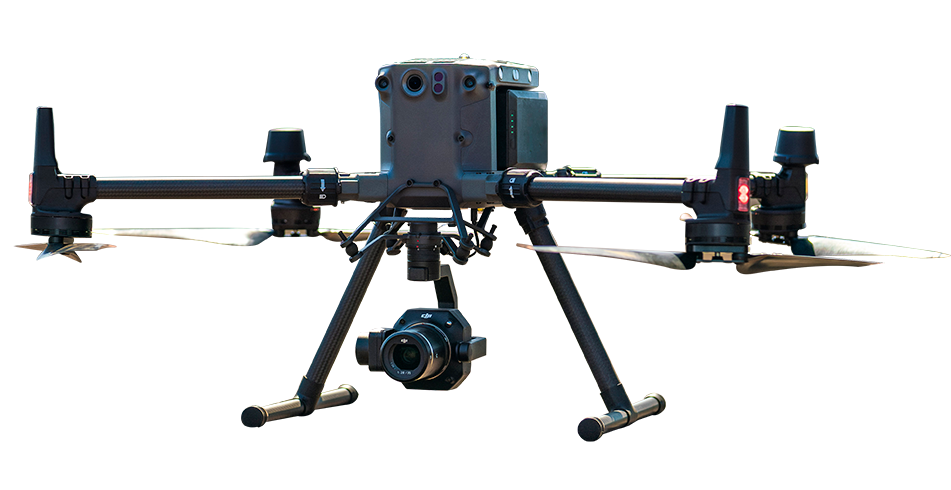
The DJI Matrice 400 with Zenmuse H30T's 1280×1024 thermal camera resolves the temperature differentials on process vessel surfaces, insulation hot spots, refractory failure zones on fired heaters, and the electrical component faults in motor control centres and switchgear that indicate developing equipment failure. At 59 minutes of flight time, the Matrice 400 covers a complete oil and gas processing unit all vessels, all piping, all electrical infrastructure in a single sortie without battery change.
For Nigeria's onshore processing facilities in the Niger Delta, Angola's Soyo LNG facility, and Mozambique's Eni and TotalEnergies Rovuma Basin infrastructure the Matrice 400 thermal facility inspection provides the equipment health data that preventive maintenance programmes require at the inspection frequency that continuous production targets demand.
Flare stacks, storage tank shells, facility structural steelwork, and the exposed piping of outdoor processing units require periodic visual condition inspection that identifies corrosion, mechanical damage, coating failure, and structural deformation. The DJI Matrice 400 with Zenmuse H30T's 34× optical zoom inspects the complete exterior surface of a tall flare stack from the base supporting structure through the refractory-lined tip from an operating altitude that maintains safe standoff from the elevated combustion zone at the stack tip.
For storage tank shell inspection, the zoom camera documents corrosion patterns, weld seam conditions, and surface coating failure across the tank's full circumference and height without requiring inspection personnel to climb the tank shell or deploy rope access rigs. The laser rangefinder measures precise standoff distance to the tank surface enabling consistent distance-calibrated imagery across every inspection cycle.
Nigeria's offshore production platforms in the Niger Delta, Angola's deepwater production FPSOs, and Ghana's Jubilee FPSO infrastructure all present the additional inspection challenge of platform access helicopter deployment for inspection crew, deck handling logistics, and the weather-window limitations that interrupt manned inspection programmes. The Matrice 400's ship-based deck landing capability enables it to be launched and recovered from the FPSO or platform deck during inspection missions eliminating the helicopter requirement for drone-based inspection activities once the aircraft is on the platform.
The DJI Dock 3 enables scheduled autonomous inspection of remote pipeline tie-in points, compressor stations, metering facilities and security perimeters without daily crew deployment. Morning thermal checks of process equipment, perimeter-security patrols, and storage-tank level and condition monitoring can be delivered to the operations centre through DJI FlightHub 2 without requiring on-site personnel for every routine monitoring cycle.
DJI enterprise drones equipped with thermal and zoom cameras can inspect process equipment, storage tanks, structural steelwork and electrical infrastructure from a safe aerial distance.
The captured thermal and visual data can help inspection teams identify abnormal heat signatures, visible corrosion, mechanical damage and structural-condition concerns without requiring personnel to enter hazardous areas close to live, pressurised hydrocarbon systems.
Yes. The DJI Matrice 400 paired with a compatible zoom and thermal payload, such as the Zenmuse H30T, can inspect flare stacks from a safe stand-off distance.
The system can document visible structural conditions, refractory-condition indicators, flare-tip areas and corrosion affecting support frameworks from the lower structure to the top of the stack.
This can reduce the immediate need for rope-access teams, scaffolding or elevated-platform equipment during the initial inspection stage.
Aerosmart provides DJI enterprise drone solutions for oil and gas inspection requirements across multiple African markets, including Nigeria, Angola, Mozambique, Ghana, Tanzania, Uganda, Senegal and Ivory Coast.
Support may include drone and payload selection, export documentation, shipping coordination, technical guidance, training and country-specific regulatory information.
Product availability, delivery arrangements and regulatory requirements should be confirmed for the destination country before purchase or deployment.

Fill in your details below and our team will get back to you with a personalised quote.