Africa's private security sector is one of the continent's largest employment categories and its fastest evolving in terms of the technology it deploys. Mine sites in Zambia, Ghana, and the DRC, agricultural estates in Kenya and Ethiopia, oil and gas facility perimeters in Nigeria and Angola, commercial real estate and residential developments in Nairobi, Lagos, Accra, and Kigali, and the conservation concessions that protect Africa's high-value biodiversity all require perimeter and site security capability that traditional guard-and-fence models cannot deliver at the scale and cost that commercial viability demands.
aerosmart supplies DJI enterprise drone solutions for private security operations across 14+ African countries autonomous perimeter patrol, on-demand aerial response to detected intrusions, thermal surveillance for night operations, and the fleet management infrastructure that transforms individual aircraft into a coordinated, reportable, scalable security aerial capability.
A fence and a guard can protect a perimeter that is both short enough and well-lit enough for a human guard to observe continuously. Africa's mining concessions cover hundreds of hectares. Agricultural estates in Kenya's Rift Valley and Ethiopia's Oromia region extend over thousands of hectares of terrain that no ground patrol programme can simultaneously observe at the density required to detect intrusion reliably. Pipeline rights-of-way in Nigeria's Niger Delta run for hundreds of kilometres through terrain that ground patrol cannot consistently cover.
The physics of human observation and ground patrol speed mean that large-perimeter security in Africa has historically operated on a detection lag the guard discovers that an intrusion has occurred well after the intrusion has happened, by which time the perpetrators are gone and the damage stolen ore concentrate, missing agricultural inputs, cable theft, poached animals, or tapped pipeline is already complete.
Aerial drone surveillance operates on a different logic. The aircraft observes the entire protected area from altitude, not a segment of the perimeter from ground level. Thermal imaging detects warm human bodies regardless of vegetation cover, darkness, and the camouflage measures that experienced intruders use to defeat visual observation. Autonomous scheduled patrol ensures systematic coverage without the attention variation, fatigue, and route predictability that human patrol produces.
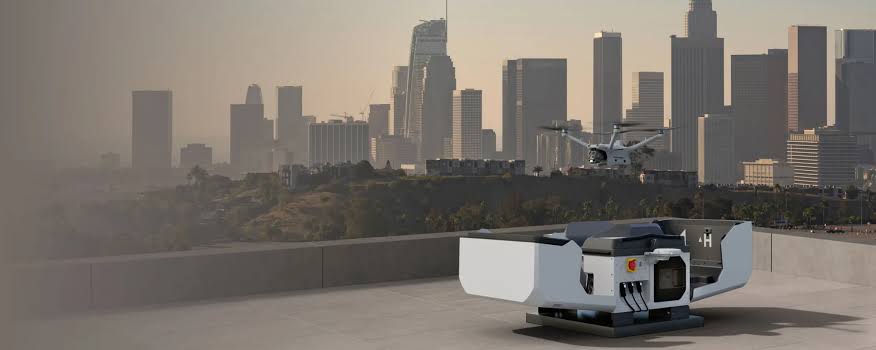
The DJI Dock 3 autonomous station is the foundational technology for large-perimeter private security in Africa. The aircraft launches on schedule every two hours, every night, or on any cycle the security programme requires covers the defined patrol area thermally and visually, and returns to the dock to charge and await the next deployment. No guard is present at the launch site. No pilot is needed on-site. The security operations centre receives the patrol footage automatically through DJI FlightHub 2 and reviews it for intrusion events without the patrol being dependent on a guard's presence, alertness, or route adherence.
Smart detection alerts automatically flagging detected human and vehicle movement in restricted areas during the patrol footage review reduce the attention demand on operations centre personnel monitoring multiple camera feeds and patrol records simultaneously. When smart detection identifies an anomaly, the operator reviews the flagged event and decides on the response rather than watching hours of footage to find the minutes of interest.
For mining security in Zambia's Copperbelt where illegal artisanal mining intrusion costs producers millions annually, for agricultural estate security in Kenya's flower farming belt where crop theft and input theft are significant operational losses, and for oil and gas facility perimeter security in Nigeria where pipeline tapping represents both a commercial loss and an environmental disaster the Dock 3 autonomous patrol system is the security infrastructure that covers the perimeter at the spatial scale and temporal frequency that meaningful protection requires.
When the autonomous patrol or a guard detects a potential intrusion event, the immediate requirement is precise, real-time intelligence about what is happening, where, and with how many people the information that determines the appropriate security response without committing personnel before the situation is understood.
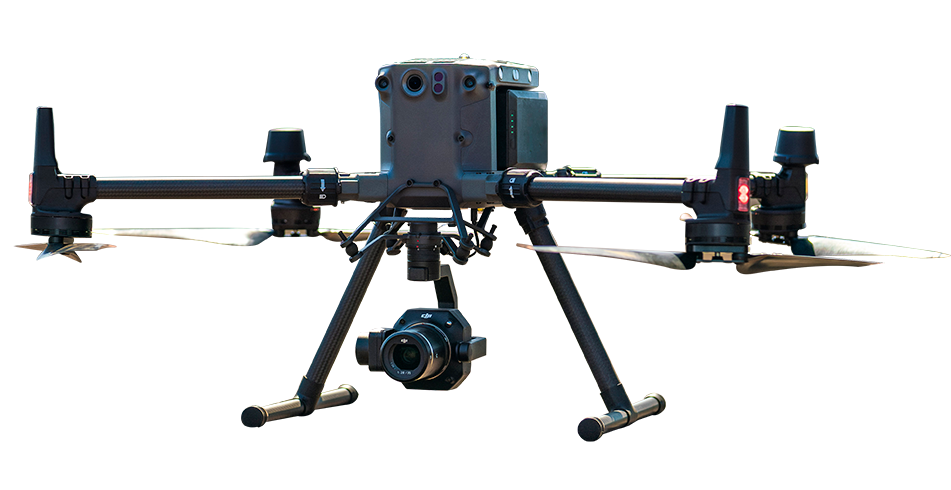
The Matrice 400 with H30T is the response aerial asset launched immediately on detection alert, providing the incident commander with 34× optical zoom visual identification, thermal body heat confirmation, and 3,000-metre laser rangefinding of the intrusion location within minutes of the alert. The real-time picture feeds to the operations centre and to the response team simultaneously through FlightHub 2 the response team navigates to the precise GPS-tagged location of the detected intrusion rather than searching the general area where the alert originated.
For private security operations where the aircraft is held at a manned security post and deployed on demand in response to sensor alerts, guard reports, or CCTV system triggers the Matrice 30T's 30-second case-to-airborne deployment, IP55 all-weather capability, and Smart Track subject following provides the immediate aerial response asset that manned security operations need alongside their ground response capability.
Mining site anti-intrusion: Scheduled autonomous thermal patrol of mining site perimeters and ore processing areas during non-operational hours detecting illegal artisanal mining activity, concentrate theft, and equipment interference before significant losses accumulate.
Agricultural estate protection: Nightly perimeter patrol of large agricultural estates in East Africa detecting crop theft, input theft, and livestock theft at the moment of occurrence rather than discovering losses during the following working day.
Oil and gas pipeline monitoring: Scheduled aerial inspection of pipeline rights-of-way in Nigeria and Angola detecting tapping activities, ground disturbance indicating pipeline interference, and vehicle movement in restricted pipeline corridors.
Residential estate security: Aerial perimeter patrol of gated residential developments in Nairobi, Lagos, Accra, and Kigali providing development security management with overhead perimeter intelligence that supplements fence and guard systems.
Conservation anti-poaching: Scheduled autonomous night patrol of conservation area boundaries in Kenya, Botswana, Uganda, and Rwanda the aerosmart Africa conservation security application that detects organised poaching teams before they reach their target animals.
DJI enterprise drones support African private security operations by providing systematic aerial perimeter surveillance across large sites. They can conduct autonomous scheduled patrols, detect intrusions using thermal imaging at night and respond on demand to provide real-time intelligence about detected incidents. Smart Track can also maintain a visual lock on subjects of interest, helping security response teams coordinate their actions more effectively.
Drones supplement rather than replace physical security teams. They can detect intrusions that ground patrols may miss, monitor large perimeters that human patrols cannot observe consistently and provide real-time intelligence that directs guard teams to precise intrusion locations. Combining autonomous aerial patrols with an effective ground response team is generally more effective than relying on either capability alone, particularly across large African mining sites and private estates.
The DJI Dock 3 with the Matrice 4D or Matrice 4TD provides a complete autonomous security patrol system. It supports scheduled launches without requiring personnel to remain permanently on site, while offering visual and thermal patrol capabilities. Patrol information and operational data can also be uploaded automatically to the security operations centre through DJI FlightHub 2.
Yes. The DJI Matrice 4TD and Matrice 30T carry thermal cameras capable of detecting human heat signatures in complete darkness without active illumination. Night-time conditions can be particularly effective for thermal intrusion detection because the temperature difference between human body heat and the cooler surrounding environment is often more clearly distinguishable.

Fill in your details below and our team will get back to you
with a personalised quote.