

Africa's solar energy sector is expanding at a pace that makes it the fastest-growing new electricity generation category on the continent. Egypt's Benban Solar Park, Kenya's Garissa Solar Power Plant, Ethiopia's growing utility solar programme, Ghana's distributed solar installations, Nigeria's emerging commercial solar sector, Morocco's Noor Solar Complex, and the rapidly expanding residential and commercial rooftop solar markets across the continent's urban centres all represent solar assets where the detection of underperforming panels before they reduce generation and revenue is both an operational priority and a maintenance efficiency challenge.
A single solar panel in a large PV array that is operating at reduced output due to a cell fault, a soiling pattern, a connection issue, or a physical damage event reduces the generation output of the entire string it belongs to. In large solar installations containing thousands to tens of thousands of panels across many hectares of solar field, identifying which specific panel or panels are underperforming is the inspection challenge that makes ground-based visual inspection walking the rows of a large solar farm an enormously time-consuming and incomplete exercise.
DJI thermal drone inspection from aerosmart covers an entire solar installation in a fraction of the time that ground inspection requires identifying every hotspot, every underperforming cell, and every fault-indicating temperature anomaly across the complete panel field in a single systematic aerial thermal survey.
Photovoltaic panels produce electrical power by converting sunlight into current. When a cell within a panel fails to convert light normally due to cell damage, cell mismatch, bypass diode failure, soiling concentration, or delamination that cell absorbs solar energy as heat rather than converting it to electricity. The result is a thermal hotspot a localised area of elevated temperature visible to a thermal camera as a bright region against the cooler surrounding panel surface.
Different fault types produce characteristic thermal signatures a single hot cell indicates a localised cell fault, a hot row indicates a string mismatch or bypass diode issue, a uniformly warm panel that is warmer than its neighbours indicates a connection resistance fault, and a panel that is completely cool and dark in the thermal image indicates a complete panel disconnect. An experienced PV inspection analyst reading a drone thermal survey of a solar installation identifies and categorises every fault type across the complete installation from a single flight dataset.
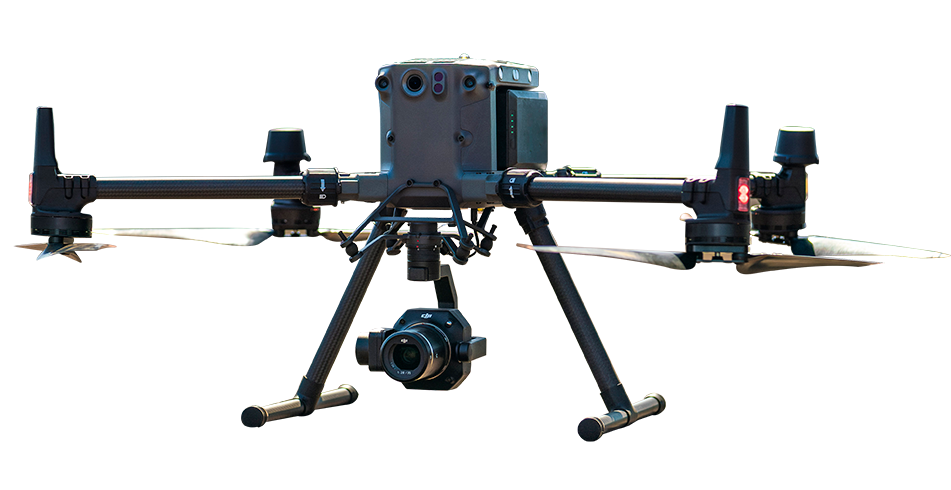
The DJI Matrice 30T's integrated thermal camera, combined with a systematic grid mission planned in DJI Pilot 2 at the optimal altitude for PV panel thermal imaging typically 30 to 50 metres above the panel surface provides the complete thermal survey dataset for small to medium solar installations at the spatial resolution that fault-level identification requires.
For Kenya's commercial rooftop solar sector, Ghana's distributed solar installations, and the growing small-scale utility solar projects across East and West Africa the Matrice 30T's combination of portability, rapid deployment, and integrated thermal capability provides the accessible PV inspection solution that installation owners and maintenance contractors can deploy without specialist drone survey infrastructure.
For large utility solar installations Egypt's Benban, Morocco's Noor, and the utility-scale solar projects that are increasingly entering the African power sector across multiple countries the DJI Matrice 400 with Zenmuse H30T provides the combination of thermal resolution, flight endurance, and systematic coverage capability that inspects tens of thousands of panels per operating day.
The H30T's 1280×1024 thermal resolution identifies individual cell hotspots within panel arrays from the optimal inspection altitude. The 34× optical zoom documents the visual condition of identified fault panels physical damage, soiling patterns, and structural deformation alongside the thermal fault signature, providing the complete fault record for maintenance work order generation. The Matrice 400's 59-minute flight time covers significantly more panel area per battery cycle than shorter-endurance platforms reducing the number of battery cycles and total inspection time required for a large solar farm inspection programme.
For utility solar installations where quarterly or annual formal inspection is supplemented by more frequent automated monitoring between formal inspection events the DJI Dock 3 enables monthly or bimonthly thermal patrol surveys of the complete installation without inspection crew deployment for routine monitoring cycles.
The automated monitoring programme identifies the fault panels that develop between formal inspection cycles enabling targeted panel replacement or repair before the fault persists through the next scheduled inspection date and continues to suppress string output in the interim.
Egypt’s Benban Solar Park: 37 km² of PV panels across one of the world's largest solar installations. Drone inspection is the only practical inspection method at this scale ground walking inspection would take weeks for what drone inspection covers in days.
Morocco’s Noor Solar Complex: Concentrated Solar Power (CSP) and PV combined installation requiring both thermal mirror inspection and PV panel thermal survey drone inspection covers both asset types in the same programme.
Kenya’s commercial solar market: Growing commercial and industrial rooftop installations in Nairobi and Mombasa where quarterly drone thermal inspection as a service provides building owners with the panel performance assurance that maximises generation return on their installation investment.
DJI enterprise drones equipped with thermal cameras can fly systematic grid missions over solar installations and capture thermal imagery across the panel array. Abnormal heat patterns may indicate cell defects, connection problems, bypass-diode failures, disconnected modules or soiling-related performance issues. The resulting imagery helps inspection teams locate panels that require closer testing or maintenance.
Drone-based thermal inspection can help identify individual cell hotspots, bypass-diode failures, string mismatch patterns, high-resistance connections, disconnected panels and uneven heating associated with dirt or shading. These thermal findings should be reviewed alongside electrical test data and confirmed by qualified solar maintenance personnel before repairs are carried out.
Daily inspection capacity depends on the size and layout of the solar farm, panel dimensions, flight altitude, image overlap, thermal-resolution requirements, weather conditions, battery availability and local operating restrictions. A long-endurance platform such as the DJI Matrice 400 equipped with a compatible thermal payload can support large-scale inspections, but the expected daily panel count should be calculated through a site-specific mission plan.

Fill in your details below and our team will get back to you
with a personalised quote.