The infrastructure Africa depends on is inspected less often than it should be because inspecting it properly means putting people on structures, alongside energised equipment, and at heights where the consequence of a mistake is severe. Inspection frequency is therefore often set by what is affordable and safe, rather than by what the asset condition actually requires.
Drone inspection changes both constraints simultaneously. The aircraft goes where an inspector cannot safely go, captures detail that ground observation cannot resolve, and returns thermal and visual data at a level that hands-on inspection frequently does not achieve. Nobody climbs, nothing needs to shut down, and the cost per inspection drops enough for frequency to become a planning decision rather than a budget concession.
Across African markets, the asset base requiring inspection is growing quickly: transmission networks extending into new areas, oil and gas infrastructure expanding across West and East Africa, solar installations scaling from Egypt and Morocco through the distributed commercial market, and the bridges, roads, and buildings supporting a continent-wide construction programme.
Aerosmart supplies, configures, and supports the complete DJI inspection ecosystem across 14+ African countries as an authorised DJI Enterprise dealer.
| Specification | Detail |
|---|---|
| Inspection Platforms | Matrice 400 · Matrice 350 RTK · Matrice 30T · Matrice 4T |
| Autonomous Systems | DJI Dock 3 · DJI Dock 2 |
| Multi-Sensor Payloads | Zenmuse H30T · H20T · H20N |
| Thermal Resolution | Up to 1280 × 1024 |
| Optical Zoom | Up to 34× optical · 400× digital |
| Laser Rangefinder | Up to 3,000 m |
| LiDAR | Zenmuse L2 · Zenmuse L3 |
| Illumination | Zenmuse S1 · 500 m LEP |
| Flight Endurance | Up to 59 minutes |
| Environmental Rating | IP55 · -20°C to 50°C |
| Transmission | Up to 40 km |
| Software | DJI Pilot 2 · DJI FlightHub 2 · DJI Terra |
| Delivery Markets | 14+ African countries |
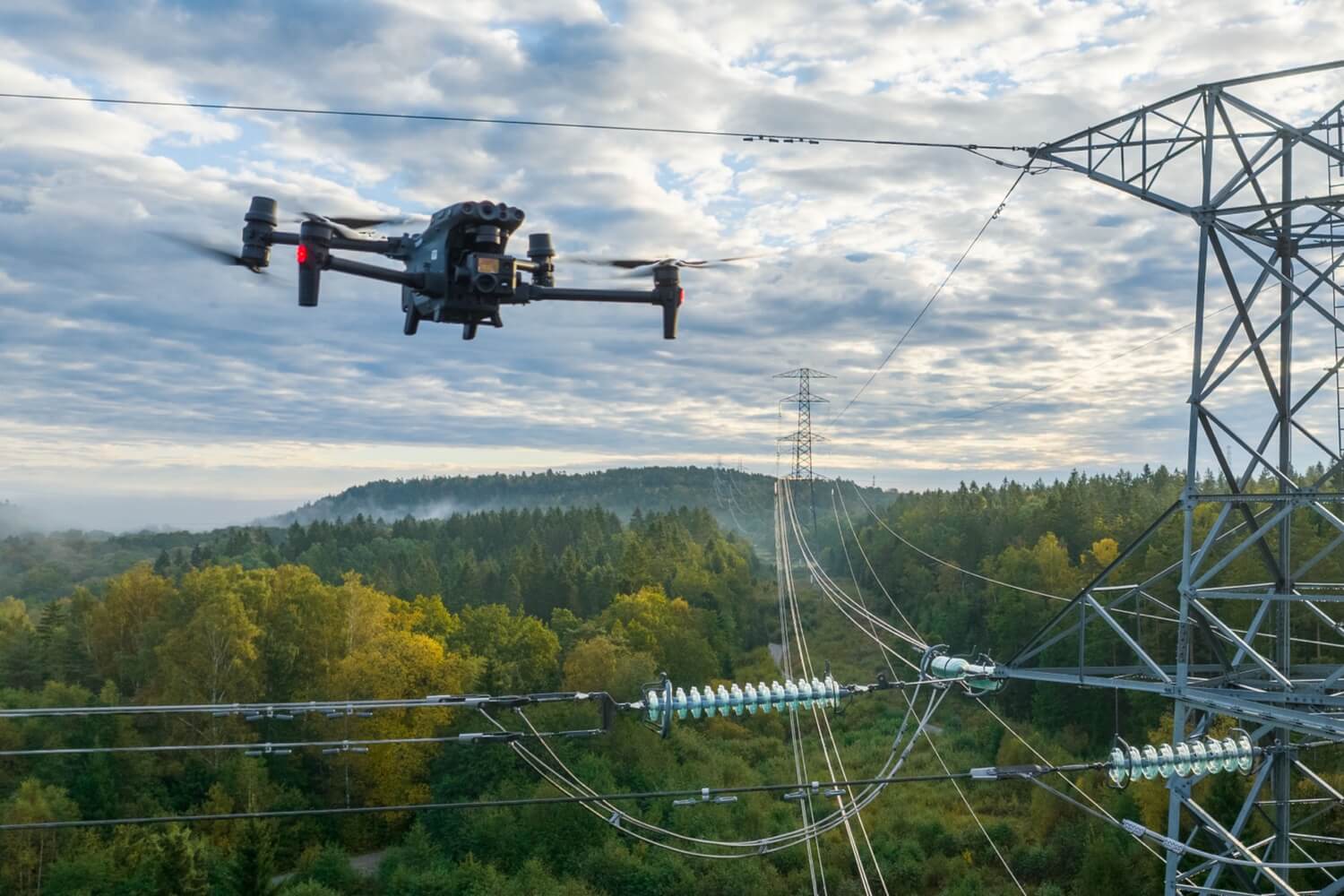
Powerline Inspection
Conductor condition, insulator integrity, connector thermal faults,
and vegetation encroachment along transmission corridors. The Matrice
400 Powerline Follow mode tracks conductors autonomously while
maintaining a safe operating distance.
Substation Inspection
Thermal surveys of transformers, busbars, circuit breakers, and
capacitor banks identify temperature differences that may indicate
developing faults before failure.
Oil and Gas Facility Inspection
Process vessel, heat exchanger, flare stack, and storage tank
inspection can be completed on live facilities without interrupting
production.
Pipeline Inspection
Thermal leak-signature detection, right-of-way encroachment monitoring,
and corridor LiDAR mapping across long linear routes.
Solar PV Inspection
Thermal surveys identify cell faults, bypass-diode failures, string
mismatches, and soiling patterns across complete installations in a
single flight.
Wind Turbine Inspection
Close-range blade imaging identifies leading-edge erosion, cracks,
lightning damage, and subsurface delamination without rope access.
Bridge Inspection
Deck, soffit, pier, and abutment condition documentation includes
below-deck areas that ground-level and deck-level inspections cannot
easily reach.
Roof Inspection
Membrane-condition surveys and thermal moisture detection identify
water ingress beneath the surface of large commercial and industrial
roofs.
Many equipment failures develop thermally before they develop mechanically. Connections become hotter as resistance increases. Bearings heat as they degrade. Insulation approaches breakdown. Refractory damage becomes visible through a vessel shell. These problems may not be visible to the eye, but they can be detected through thermal inspection.
The Zenmuse H30T's 1280 × 1024 radiometric thermal camera measures absolute temperature at any point in the image, producing quantified findings that can be compared with previous inspections rather than relying on subjective thermal impressions. For African operators managing constrained maintenance budgets, this quantification helps direct resources towards the equipment that genuinely requires attention.
The cost that limits inspection frequency is often deployment: travel, crew time, access coordination, and site preparation. The inspection itself may take only an hour, while reaching and preparing the site can take an entire day.
DJI Dock 3 removes much of that deployment requirement. Installed at the facility, it can launch on schedule, fly a programmed inspection route, return, recharge, and upload data to DJI FlightHub 2 automatically. Inspection frequency then becomes a scheduling decision. For remote African sites positioned where the resource is rather than where the workforce is located, autonomous inspection can make the difference between a monitored and an unmonitored asset.
01 Authorised DJI Enterprise Dealer
Genuine products, original warranties, current firmware, and aviation
authority registration documentation.
02 Delivery Across 14+ Countries
Direct shipping, export documentation, and import duty guidance.
03 Regulatory Guidance Included
A country-specific written RPAS brief is provided with every purchase.
04 Inspection-Specific Configuration
Payload selection is matched to your fault classes, standoff
requirements, facility scale, and operating environment.
05 Post-Sale Support and Servicing
Dubai-based repair, maintenance, and remote diagnostic support.
06 Inspection Operations Training
Training covers thermal interpretation, radiometric measurement,
defect geolocation, and report production through Aerosmart Academy.
07 Complete Programme Configuration
Aircraft platform, payload, DJI Dock, software, and training supplied
as a complete working inspection capability.
Yes. Aerial inspection is non-contact and non-intrusive, so equipment shutdown is generally not required. Thermal inspection is often most effective at normal operating temperature because developing faults produce clearer temperature differences during operation.
Thermal inspection can identify connection-resistance faults, bearing degradation, insulation breakdown, refractory damage, blocked cooling circuits, solar-cell faults, bypass-diode failures, and moisture ingress beneath roof membranes.
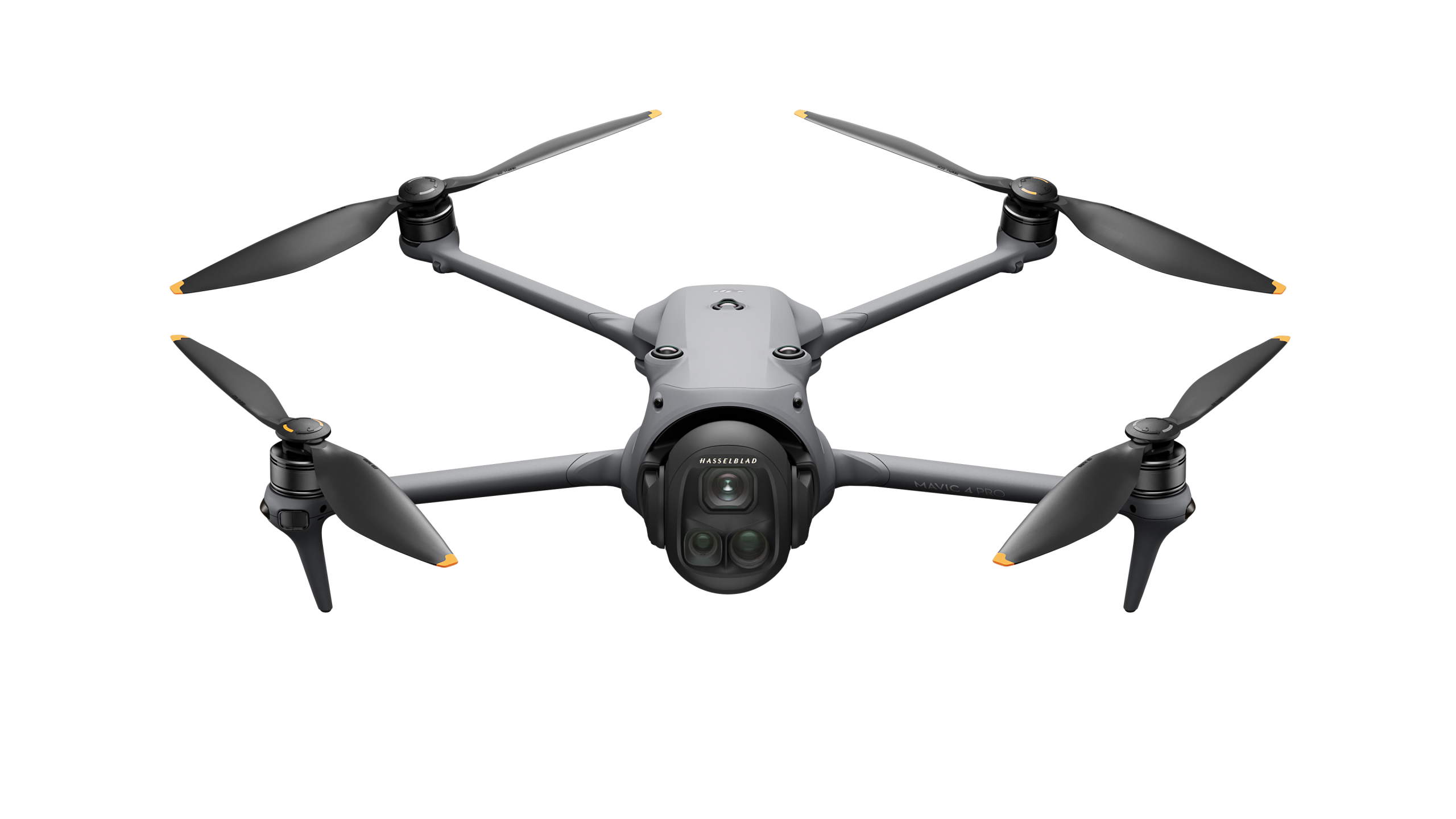
The Matrice 400 with Zenmuse H30T is suitable for demanding inspection operations, offering up to 59 minutes of flight endurance, 1280 × 1024 thermal resolution, 34× optical zoom, and laser rangefinding up to 3,000 m. The Matrice 30T is suitable for daily multi-site inspections requiring fast deployment.
It records the precise GPS position of an identified defect, allowing maintenance teams to navigate directly to the fault instead of searching the structure for the anomaly described in the inspection report.
For routine condition documentation and defect identification, drones are generally faster, safer, and more cost-effective. Rope access may still be necessary for physical repairs that require direct contact with the structure. Drones identify what requires attention, while the appropriate access method is used to complete the repair.
A DJI Dock 3 installed at the facility launches the aircraft on schedule without on-site personnel, flies the programmed inspection route, returns to the Dock, recharges, and uploads the collected data to DJI FlightHub 2 automatically.
Aerosmart supplies African markets including Kenya, Nigeria, Ethiopia, Ghana, Tanzania, Uganda, Rwanda, Zambia, Mozambique, Malawi, Zimbabwe, Namibia, Mali, Chad, Togo, Sierra Leone, The Gambia, Seychelles, the Republic of the Congo, the Democratic Republic of the Congo, and Côte d'Ivoire.

Fill in your details below and our team will get back to you with a personalised quote.