
Nigeria is the largest drone market in West Africa, and its regulator has moved decisively to formalise the sector. In May 2026 the Nigeria Civil Aviation Authority (NCAA) launched a dedicated digital Drone (UAS/RPAS) regulation portal to streamline registration and approvals and support the industry's rapid expansion. For Nigerian operators, that shift from restriction toward structured enablement is exactly what turns a stalled pilot project into a scaled, revenue-generating operation.
The demand is driven by scale. Oil and gas infrastructure across the Niger Delta, commercial agriculture spread across the Middle Belt and northern states, an infrastructure boom in Lagos and Abuja, and a security sector under constant pressure all create requirements where aerial capability delivers measurable value provided the platform is genuine, supported, and NCAA-compliant from day one.
What separates a productive fleet from an expensive shelf of hardware is the support around it: correct platform selection for the mission, clean import and registration paperwork, trained pilots, and a service pathway when something goes wrong. Aerosmart Africa is built around that full lifecycle rather than a single transaction, which is why Nigerian survey firms, agribusinesses, energy contractors and public bodies treat us as a long-term partner rather than a one-off supplier.
Aerosmart Africa supplies the complete DJI range into Nigeria as an authorised DJI Enterprise and DJI Agriculture dealer, with delivery to Lagos, Abuja, Port Harcourt and nationwide, NCAA regulatory guidance, and on-site training across the country.
Oil, Gas and Energy: Nigeria's hydrocarbon corridor across Rivers, Bayelsa and Delta states relies on constant inspection of pipelines, flare stacks, tank farms and flow stations. Enterprise platforms with thermal and high-zoom payloads detect leaks, corrosion and unauthorised tapping from safe standoff, without shutting assets down or exposing personnel. Power transmission operators use the same aircraft to inspect lines and towers across long, remote spans.
Agriculture: With vast arable land across Kaduna, Benue, Niger and the wider Middle Belt, Nigeria is a natural precision-agriculture market. Agriculture drones spray, spread and map crop health across rice, maize, sorghum and plantation crops, cutting chemical use and covering ground faster than manual labour while giving agronomists early sight of stress and disease.
Survey, Mapping and Construction: RTK mapping drones produce survey-grade orthomosaics, elevation models and volumetric stockpile measurements for construction firms, quarries, developers and infrastructure projects in Lagos, Abuja and beyond compressing weeks of ground survey into a single flight day.
Security, Emergency Response and Public Safety: Government agencies and private security operators deploy drones for perimeter monitoring, event oversight, search-and-rescue and rapid situational awareness. Thermal and spotlight payloads extend operations into low-light conditions where NCAA authorisation permits.
Mining and Solid Minerals: As Nigeria diversifies into solid minerals across the north-central belt, drone survey delivers pit geometry, stockpile inventory and concession mapping that ground methods cannot match for speed or safety.
Cargo and Medical Logistics: Nigeria's difficult last-mile terrain and periodic flooding make drone delivery increasingly viable for medical samples, vaccines and urgent supplies. The DJI FlyCart 30 carries 30 kg across meaningful range, and the FlyCart 100 extends payload to heavier categories, opening logistics use cases in states where road access is unreliable.
Telecoms and Utilities Inspection: Tower companies, fibre operators and water utilities inspect masts, cell sites, dams and treatment infrastructure with high-zoom and thermal payloads, reducing climb-and-inspect risk and shortening outage windows across a network that spans the entire country.
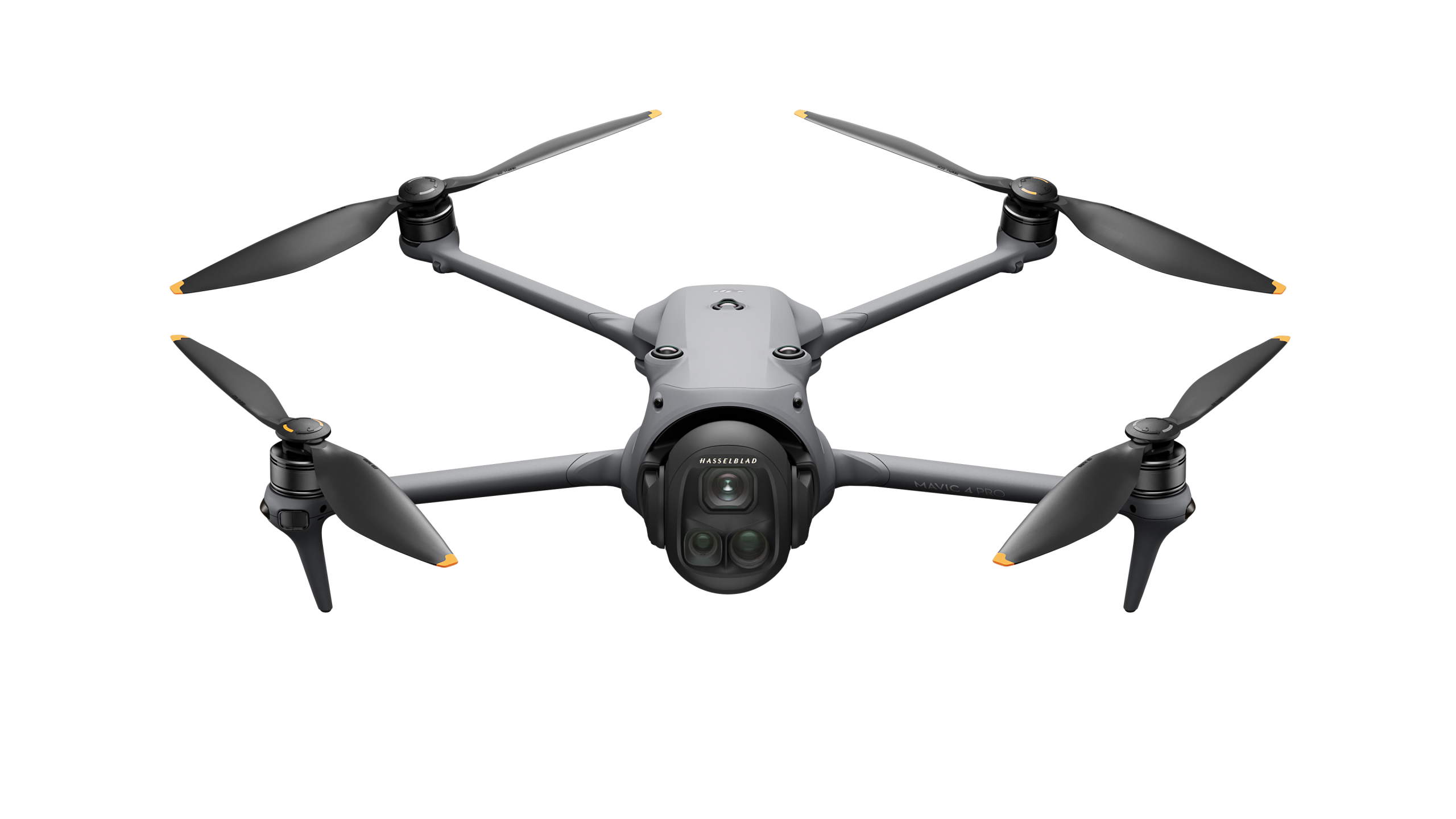
Media and Real Estate: Nigeria's film, advertising and property sectors concentrated in Lagos generate steady demand for aerial cinematography and marketing imagery on compact camera platforms such as the Mavic 4 Pro and Inspire 3.
Commercial drone use in Nigeria is regulated by the Nigeria Civil Aviation Authority (NCAA) under the Nigeria Civil Aviation Regulations 2023, with Part 21 governing Remotely Piloted Aircraft Systems (RPAS). The points below are a practical summary, not legal advice; always confirm current requirements directly with the NCAA or through Aerosmart's regulatory brief.
Aircraft Registration: Any drone weighing more than 250 grams must be registered with the NCAA, increasingly via the digital drone portal launched in 2026, using manufacturer documentation and verified serial numbers.
Remote Pilot Competency: Commercial pilots must meet NCAA training requirements and pass an aeronautical knowledge examination at an accredited testing facility.
Operator Certificate / Operating Permit: Organisations flying for any commercial purpose require the appropriate NCAA operating approval, supported by an operations manual and valid third-party liability insurance.
Operational Restrictions: Flights are generally limited to visual line of sight (VLOS); beyond-visual-line-of-sight (BVLOS) operations require specific NCAA approval. Avoid airports, government and military facilities, and other sensitive or restricted areas.
Local Ownership: RPAS registration is oriented toward Nigerian entities and government bodies; foreign-registered RPAS may only operate with express NCAA authorisation making a locally owned, locally supported fleet a practical advantage.
Import Authorisation: Bringing drones into Nigeria requires correct import documentation; equipment arriving without it risks detention at entry.
What Aerosmart provides: a written Nigeria-specific regulatory brief covering registration, pilot licensing, operator certification, import documentation and airspace restrictions plus NCAA-compatible paperwork with every purchase.
Explore DJI enterprise drones, autonomous stations, payloads, software and accessories available for organisations and authorised operators across Nigeria.
| Category | Products |
|---|---|
|
Enterprise Drones
|
Matrice 400 · Matrice 350 RTK · Matrice 4 Series · Matrice 30T |
|
Autonomous Stations
|
DJI Dock 3 · DJI Dock 2 |
|
Cargo Drones
|
DJI FlyCart 30 · DJI FlyCart 100 |
|
Agriculture Drones
|
DJI Agras T100 · DJI Agras T50 · DJI Agras T25 · DJI Mavic 3 Multispectral |
|
Payloads
|
Zenmuse H30 Series · Zenmuse L2 · Zenmuse L3 · Zenmuse P1 · Zenmuse H20 Series · Zenmuse S1 · Zenmuse V1 |
|
Camera Drones
|
DJI Mavic 4 Pro · DJI Mini 5 Pro · DJI Air 3S · DJI Inspire 3 · DJI Avata 2 · DJI Neo 2 |
|
Software
|
DJI FlightHub 2 · DJI Terra · DJI Modify · PIX4Dmatic · PIX4Dsurvey |
|
Accessories
|
DJI D-RTK 3 · DJI D-RTK 2 · DJI O4 Ground Station · AP100 Parachute |
Nigeria's operating environment favours specific platform choices. For oil, gas and power inspection, the Matrice 400 or Matrice 30T with the Zenmuse H30T pairs thermal and long-range zoom to survey infrastructure from a safe distance. For survey and solid-minerals work, the Matrice 350 RTK with Zenmuse L2 or the Matrice 400 with Zenmuse L3 for larger concessions delivers centimetre-grade LiDAR with a D-RTK base station. For agriculture, the Agras T50 suits large field crops while the T25 fits service providers and smaller holdings. High heat and humidity and Harmattan dust make an IP-rated enterprise airframe and a maintenance schedule calibrated for dust exposure a functional requirement rather than a specification detail factors Aerosmart accounts for in pre-sale consultation.
Aerosmart supports drone operators nationwide, with concentrated demand in Lagos (construction, media, survey and logistics), Abuja (government, security and infrastructure), Port Harcourt and the wider Niger Delta including Warri and Yenagoa (oil, gas and energy), Kano and Kaduna (agriculture, solid minerals and logistics), and Ibadan, Benin City, Enugu, Jos and Maiduguri. Wherever your operation is based, we deliver, configure, register and support your fleet, and our training teams travel to site so your pilots learn on the exact platform they will fly.
Aerosmart Academy delivers on-site training across Nigeria—including Lagos, Abuja, Port Harcourt, Kano, Kaduna and the oil-producing and agricultural regions—structured around NCAA certification requirements and delivered on genuine DJI enterprise platforms. Training covers flight operations, payload and mission setup, data workflows and the compliance steps operators need to fly legally and productively.
01 Authorised DJI Enterprise Dealer. Genuine products, manufacturer warranty, firmware support and NCAA-compatible documentation.
02 Nigeria Delivery. Delivery to Lagos, Abuja, Port Harcourt and locations nationwide, with customs documentation support.
03 NCAA Regulatory Guidance. A written Nigeria-specific regulatory brief is provided with every purchase.
04 Import Documentation Support. Guidance through import requirements to help avoid delays or detention at entry.
05 Sector Configuration. Inspection, surveying, agriculture and cargo operations require different systems. Aerosmart specifies the appropriate platform, payload and software workflow for each mission.
06 On-Site Training. Aerosmart Academy provides on-site operational and product training anywhere in Nigeria.
07 Service Coordination. Remote diagnostics, repair routing and DJI Care Enterprise claims are managed directly.
Aerosmart Africa is an authorised DJI Enterprise and DJI Agriculture dealer supplying across Nigeria, with delivery to Lagos, Abuja, Port Harcourt and locations nationwide.
Yes. Commercial drone operations require compliance with NCAA Part 21 RPAS rules, aircraft registration for drones over 250 g, remote pilot competency including an aeronautical knowledge examination, the appropriate operating permit or RPAS Operator Certificate and valid insurance.
Yes, with the correct import documentation. Equipment arriving without the required documentation risks detention at entry, so Aerosmart provides import guidance with every purchase delivered to Nigeria.
The DJI Matrice 400 or DJI Matrice 30T with the Zenmuse H30T pairs thermal imaging and long-range zoom to inspect pipelines, flare stacks and tank farms from a safe stand-off distance without shutting down operations.
The DJI Agras T50 suits large field crops such as rice, maize and sorghum across the Middle Belt and northern Nigeria, while the DJI Agras T25 suits service providers and smaller holdings.
The DJI Matrice 350 RTK with the Zenmuse L2, or the DJI Matrice 400 with the Zenmuse L3 for larger sites, can be paired with a D-RTK base station for centimetre-grade positioning and survey workflows.
Yes. Aerosmart Academy delivers on-site training across Nigeria, including at oilfield, industrial and agricultural sites, using genuine DJI enterprise platforms.
Yes. The DJI FlyCart 30 can carry payloads of up to 30 kg, while the DJI FlyCart 100 can carry up to 100 kg, supporting medical sample, vaccine and urgent-supply logistics in areas where road access is unreliable, subject to the relevant NCAA approvals.
Yes. Aerosmart supports operators nationwide, including Port Harcourt, Kano, Kaduna, Ibadan, Jos and the Niger Delta, with delivery, configuration, registration guidance, training and after-sales service.
Pricing depends on the aircraft, payload, software, accessories and operational configuration required. Contact Sales@aerosmartglobal.com with your application requirements for a tailored quotation.
Timelines depend on product configuration, stock availability and import clearance. Aerosmart manages the full process, including ordering, import documentation, delivery to your city, system configuration, pilot onboarding and operational setup, and provides a realistic schedule before the project begins.

Fill in your details below and our team will get back to you
with a personalized quote.