Long-Endurance Drone Platform With Power-Line-Level Obstacle Sensing
Engineered for Excellence, Designed for Versatility
VDC2 Pro Video-Based Drone Detection System Available Across Africa from Aerosmart Africa
Advanced Logistics Infrastructure Backed by Seamless Inventory Management
Established Channel Partnerships Across 30+ African Countries
Strategic Warehousing Across Key African Markets
Comprehensive Pre-Sales Consultation & Solution Engineering
The VDC2 Pro detects drones by seeing them. Optical cameras paired with AI-powered image analysis identify aerial objects within the camera's field of view, classify them by visual appearance and flight behaviour, and generate alerts with accompanying video evidence of the detection event.
That evidential output is the VDC2 Pro's distinguishing operational value. RF-based detection systems tell the security team that a drone is present and estimate where it is. Video detection shows them the drone. For incident reporting, insurance documentation, regulatory notification, and where applicable, prosecution a video record of the incursion is qualitatively different evidence from a signal detection log.
Video detection also closes a specific gap in RF-based coverage. A drone operating fully autonomously on a pre-programmed mission, transmitting nothing to a controller, is invisible to passive RF detection. It remains fully visible to a camera. In counter-UAS architectures where autonomous incursion is a credible threat scenario, video detection is not a supplementary layer but a necessary one.
Aerosmart supplies the VDC2 Pro across African markets with camera positioning consultation, AI detection configuration support, and integration guidance for existing surveillance infrastructure.
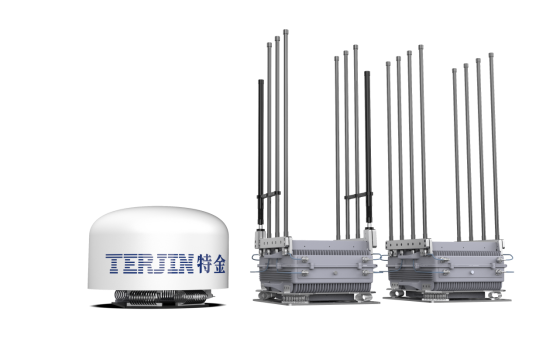
Detection method, video capability, and integration at a glance.
The VDC2 Pro's AI analysis engine distinguishes drones from the birds, aircraft, debris, and atmospheric artefacts that a camera monitoring open sky encounters continuously. Classification is based on visual characteristics and flight behaviour the distinctive motion signature of a multi-rotor drone differs measurably from a bird's flight pattern, and the AI model is trained to make that distinction reliably enough to keep false alert rates within operationally acceptable limits.
Every confirmed detection generates a video record. The security team reviewing an alert sees the drone, its approach vector, its behaviour within the protected airspace, and its departure the complete visual record of the incursion event rather than a data log describing it.
For African facility security operations where incursion incidents must be documented for corporate reporting, insurance claims, regulatory notification, or law enforcement referral, the difference between a signal log and a video record is the difference between an assertion and evidence.
A drone flying a pre-programmed autonomous mission transmits nothing. There is no controller link to intercept, no RF signature to analyse, no communication to localise. Passive RF detection however sophisticated cannot detect what does not transmit.
This is not a theoretical scenario. Autonomous mission programming is a standard feature of every major commercial drone platform. Any operator intending to conduct reconnaissance of a protected facility while defeating RF-based detection simply uploads the mission, powers down the controller link, and flies.
The VDC2 Pro sees that drone. Visual detection does not depend on the aircraft transmitting anything it depends only on the aircraft being physically present within the camera's field of view. In counter-UAS architecture terms, video detection is the layer that closes the autonomous incursion gap that RF-only systems leave open.
Many African facilities requiring counter-UAS capability already operate extensive CCTV and video management infrastructure.
The VDC2 Pro integrates with that existing infrastructure rather than requiring parallel deployment.
Existing video surveillance is extended into active drone detection capability using the camera positions, network infrastructure, and operations centre displays already installed.
For facilities where budget constraints make a fully independent counter-UAS deployment difficult to justify, integration with existing surveillance represents the most cost-efficient route to meaningful airspace detection capability.

Why Security Operators Choose aerosmart for the VDC2 Pro
Manufacturer warranty and complete documentation on every system. No grey-market counter-UAS equipment.
Direct shipping with export documentation and import guidance across African destination markets.
Country-specific guidance on surveillance, data protection, and security regulatory frameworks applicable to video detection deployment.
Field-of-view modelling, camera placement design, and integration planning with existing surveillance infrastructure.
AI detection tuning guidance, false-alert-rate optimisation, and technical support throughout the installation's operational life.
Detection interpretation, evidence-handling procedure, and VMS integration training for security operations teams.
Advice on combining video detection with RF and GNSS-integrity layers for complete coverage across all incursion scenarios.
The VDC2 Pro is available from aerosmart with delivery across 14+ African countries.
Contact our team for coverage design and pricing.
Optical cameras monitor the protected airspace while AI image analysis identifies aerial objects and classifies them by visual appearance and flight behaviour.
This distinguishes drones from birds, aircraft, and atmospheric artefacts, and generates alerts with accompanying video evidence.
Yes. Video detection does not depend on the drone transmitting any signal. It detects the aircraft's physical presence within the camera's field of view.
This closes the autonomous-incursion gap that passive RF detection cannot cover.
Yes. Every confirmed detection generates a video record showing the drone, its approach, its behaviour in the protected airspace, and its departure.
This provides the evidential documentation that incident reporting, insurance, regulatory notification, and prosecution require.
Low-light and IR-capable configuration options extend detection capability into night operations.
Contact aerosmart for configuration advice specific to your night detection requirement.
Yes. The VDC2 Pro integrates with existing video management systems and surveillance infrastructure, extending installed camera networks into active drone detection capability.
Video detection requires line of sight and is affected by heavy fog, precipitation, and complete darkness without IR capability.
It is most effective as part of a multi-layer architecture where RF detection covers the scenarios video cannot.
Pricing varies by camera count and coverage requirement.
Contact aerosmart at Sales@aerosmartglobal.com for a site-specific quote.

Fill in your details below and our team will get back to you
with a personalized quote.