
Africa's civil aviation sector is growing. Africa's drone adoption is accelerating. And Africa's airspace security requirement the counter-UAS capability that detects, tracks, and enables response to unauthorised drone activity near airports, critical infrastructure, government facilities, and major public events is expanding at the same pace but with significantly less established supply than the drone operations sector it must protect.
The same technology that has democratised aerial intelligence across Africa's mining, agriculture, conservation, and public safety sectors has created a parallel requirement for detection capability at every installation where an unauthorised drone represents a safety risk, an operational disruption, or a security threat. West Africa's international airports handle growing volumes of commercial traffic vulnerable to drone incursion. Nigeria's oil and gas infrastructure represents a surveillance and disruption target for which drone threats are a documented and active concern. East Africa's major public events Nairobi's international conferences, the African Union summits, and national celebration events across the continent create temporary airspace security requirements that event security planners must address.
aerosmart supplies professional counter-UAS detection systems across 14+ African countries the right detection technology, sized correctly for the protection requirement, with the installation guidance and technical support that ensures the system performs in African field conditions from day one.
Drone detection systems identify the presence, location, and in advanced configurations the identity and flight path of unmanned aerial vehicles operating in a defined protected airspace. They form the sensor layer of a counter-UAS capability providing the situational awareness that security teams require to assess a drone threat and initiate a proportionate, timely response.
Three detection modalities cover the full range of drone threat scenarios that African security operations encounter. Passive RF detection intercepts radio frequency communications between a drone and its controller identifying drone type, frequency band, and controller location from a distance without emitting any detectable signal itself. Video-based visual detection uses optical cameras and AI image analysis to identify drones from their visual characteristics within the camera's field of view. GNSS spoofing detection monitors GPS signal integrity to identify deliberate manipulation of satellite navigation signals a sophisticated electronic attack used to defeat drone geofencing and redirect aircraft navigation systems.
Each modality has different coverage characteristics, different environmental performance, and different limitations. Passive RF detection does not identify drones flying autonomous waypoint missions without active controller communication. Video detection requires line-of-sight and is affected by darkness and weather. GNSS spoofing detection identifies electronic interference but not the drone's physical position. The most robust counter-UAS architecture combines two or more complementary modalities the approach aerosmart recommends for every African installation where the protected asset's importance justifies the investment.
Aerosmart provides advanced drone detection systems across Africa to help governments, critical infrastructure operators, airports, border security agencies, and private organizations protect their airspace from unauthorized UAV activity. These solutions combine technologies such as RF detection, radar, optical sensors, and AI-powered analytics to accurately detect, identify, and track drones in real time. Many systems can also locate the drone pilot, classify drone models, generate instant alerts, and integrate with existing security infrastructure for a rapid response. With scalable deployment options for fixed, mobile, and high-security environments, Aerosmart's drone detection solutions deliver reliable airspace surveillance and enhanced protection against evolving drone threats across the African continent.
The PC2 Pro operates without emitting any active signal passively intercepting the radio frequency communications between drones and controllers across multiple frequency bands to identify drone presence, estimate drone and controller positions, and alert security teams in real time. Because it emits nothing, its presence cannot be detected by the drone or operator through RF analysis a critical operational security advantage for government facilities, military installations, and the sensitive infrastructure protection scenarios where counter-UAS capability must operate without revealing itself to potential adversaries.
For Nigeria's oil and gas facility perimeter monitoring, Kenya's international airport approach zone security, and government facility protection across multiple African capitals the PC2 Pro's passive detection architecture provides the covert continuous airspace surveillance that sensitive site protection requires.
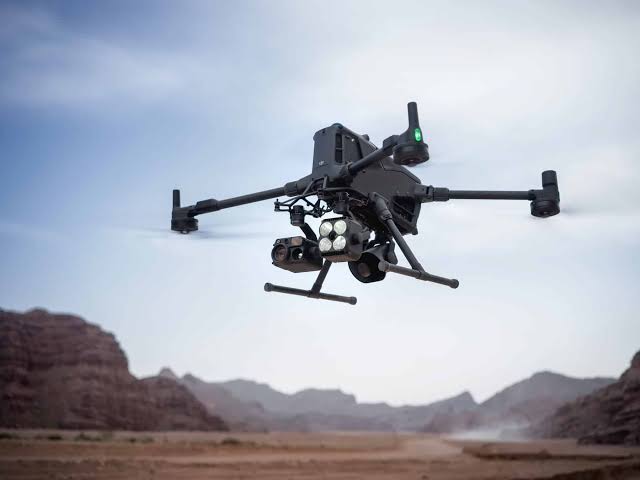
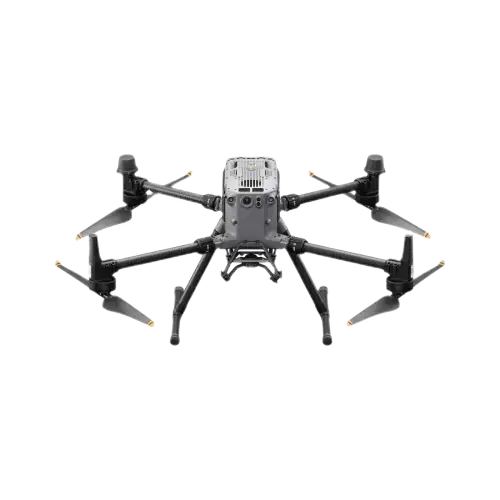
The DJI Matrice 350 RTK is the established survey and inspection platform for Africa's professional drone sector the aircraft that cadastral survey programmes in Rwanda and Kenya, mine survey operations in Zambia and Ghana, and construction monitoring across Africa's infrastructure development corridor have been built around. Fifty-five minutes of flight time, centimetre-accurate RTK positioning without ground control points, IP55 protection, dual GPS, and triple-redundant IMU provide the reliability and accuracy baseline that formal survey delivery requires.
Compatible with the complete Zenmuse payload range H30 Series for inspection, L2 for LiDAR survey, P1 for photogrammetry, H20 for multi-sensor surveillance the Matrice 350 RTK is the multi-role platform that serves the majority of Africa's professional enterprise drone requirements from a single airframe investment.
The PL1-B is designed for rapid deployment at temporary security perimeters the counter-UAS capability for African event security operations, VIP protection assignments, and field security programmes where a permanent installation is unavailable or impractical. Set up on arrival, operational within minutes, recovered at event conclusion.
For the African Union summit security in Addis Ababa, Nairobi's major international conference events, Lagos's public celebrations, and Accra's national events the PL1-B provides deployable counter-UAS airspace monitoring that event security planners can integrate into the operational security architecture of any venue without pre-installation infrastructure requirements.
The FPC1 is a fixed-installation drone detection sensor for permanent deployment at facilities requiring continuous, unattended airspace monitoring airports, power generation stations, LNG terminals, telecommunications infrastructure, data centres, and the expanding portfolio of critical national infrastructure across Africa's urbanising economies. Continuous monitoring without operator-dependent activation the FPC1 alerts security teams to detected drone activity whether during active security watch or in unattended monitoring periods where automated alerting is the only response mechanism.
For the growing number of African airport operators, energy companies, and government agencies formalising their airspace security programmes in response to rising drone adoption the FPC1 provides the permanent detection foundation that a credible airspace security programme requires.
The VDC2 Pro uses optical cameras and AI-powered image analysis to identify drones from visual appearance and flight movement characteristics within the camera field of view. Provides visual detection capability for drones operating without active RF communication autonomous mission-mode drones that passive RF systems cannot intercept. Simultaneously generates visual documentation of detected drone activity the video evidence that incident reporting, insurance claims, and regulatory notification require.
For African airport perimeter security where video surveillance infrastructure is already deployed and counter-UAS video detection can be integrated with existing camera networks, the VDC2 Pro extends existing visual security infrastructure into active drone detection capability without a separate dedicated system deployment.
The FS1 monitors GPS and GNSS signal integrity to identify active spoofing deliberate broadcast of false satellite navigation signals designed to defeat drone geofencing, corrupt flight path data, or redirect aircraft navigation by replacing genuine satellite signals with counterfeit inputs the drone accepts as authentic.
GNSS spoofing is the electronic attack method most directly targeted at defeating the regulatory and safety mechanisms that protect African airports, oil and gas facilities, and government installations from drone intrusion. Geofencing is only effective if the GPS signal the drone relies on to enforce it is genuine. The FS1 detects when that signal is being manipulated alerting the security team to active electronic interference before its effects compromise the integrity of the protected airspace.
No single detection technology is universal. The RF detection that catches a standard controller-linked drone misses an autonomous waypoint mission. The video detection that confirms a visual sighting has limited range at night. The spoofing detection that flags GPS interference does not tell you where the drone is. Each technology covers what the others miss.
Africa's most sophisticated security programmes and the international energy, aviation, and government operators that aerosmart serves across the continent combine modalities deliberately. Passive RF detection as the primary perimeter sensor. Fixed video detection providing visual confirmation of RF detections and independent detection of autonomous-mode aircraft. GNSS spoofing detection as the electronic integrity monitoring layer. Together these create a multi-layer detection architecture that is significantly harder to defeat than any single-modality system, and that provides the security confidence that sensitive African infrastructure protection programmes require.
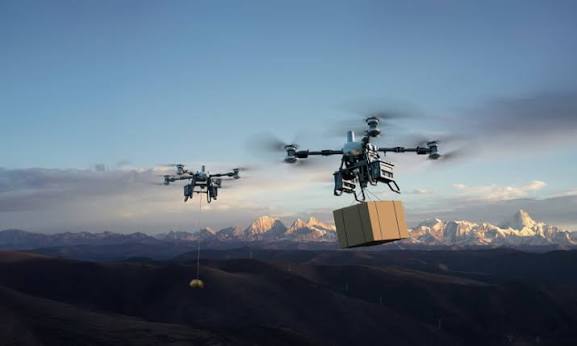

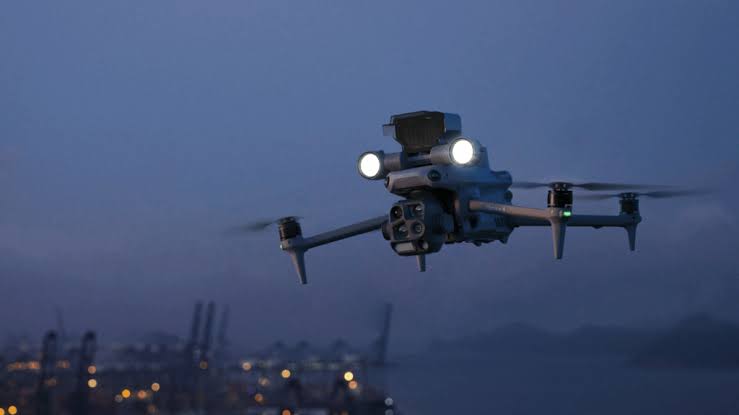

Aerosmart supports security organisations, government agencies, airport operators, industrial facilities and conservation teams across Africa with professionally designed drone detection systems, country-specific regulatory guidance, documented international delivery, installation support and dependable post-sale technical assistance.
Technical System Design for African Contexts
African security environments present challenges that generic counter-UAS
specifications may not fully address. The dense radio-frequency environment
of major West African cities differs significantly from the open terrain of
East African conservation areas, while the import and deployment requirements
for electronic detection equipment also vary between countries such as
Nigeria, Kenya, Ghana, Rwanda and South Africa. Aerosmart's technical team
advises on system selection, sensor positioning, deployment architecture and
regulatory considerations according to each client's operational environment.
Country-Specific Regulatory Compliance Guidance
Electronic detection equipment may operate under telecommunications, civil
aviation, data-protection and national-security regulations in each African
country. Aerosmart provides guidance on the applicable requirements for
counter-UAS system importation and deployment in the destination market,
helping clients plan systems that are both operationally effective and
aligned with the relevant legal and regulatory framework.
Delivery and Installation Support Across 14+ Countries
Aerosmart arranges direct shipping from Dubai with complete export
documentation, official product paperwork and practical import guidance.
Installation and technical integration support is provided for every system
supplied, including antenna placement, RF-environment assessment, camera
field-of-view optimisation, sensor coverage planning and integration with
existing command centres and security operations infrastructure.
Training and Ongoing Technical Support
Aerosmart provides security-team operator training, system configuration
guidance, alert-verification procedures and assistance with developing
practical incident-response workflows. Ongoing support is available from
Aerosmart's Dubai-based technical team throughout the system's operational
life, with assistance available in English, Arabic and French for security
professionals operating across diverse African markets.
Aerosmart supplies a comprehensive counter-UAS detection range across 14+ African countries, including the PC2 Pro passive RF detection system, PL1-B portable detector, FPC1 fixed sensor, VDC2 Pro video detection system and FS1 GNSS spoofing detection system. Contact Aerosmart for site assessment, system selection and deployment recommendations based on your security requirements.
Airports generally require a multi-layered detection architecture. This may combine the PC2 Pro passive RF system for approach-corridor and perimeter coverage, FPC1 fixed sensors for continuous unattended monitoring and the FS1 system for GNSS signal-integrity protection. Contact Aerosmart for an airport-specific counter-UAS architecture recommendation based on the facility's airspace, layout and operational requirements.
Yes. GNSS spoofing involves the deliberate transmission of false satellite-navigation signals that can interfere with drone positioning, navigation and geofencing controls. It represents a growing concern for airports, energy facilities and other high-value infrastructure. The FS1 spoofing detection system identifies active GNSS manipulation attempts in real time, providing a signal-integrity layer that conventional RF and video detection systems may not cover.
Yes. The PL1-B portable drone detection system is designed for rapid temporary deployment at major events, public gatherings, conferences, national celebrations and sports venues. It can be transported to the location, configured within a short period and recovered after the event, providing professional counter-UAS coverage without requiring permanent pre-installed infrastructure.
Electronic detection equipment may be regulated under telecommunications, civil aviation, data-protection and national-security frameworks that differ between African countries. Aerosmart advises customers on the relevant importation, licensing and deployment requirements in each destination market, helping organisations plan systems that are both legally compliant and operationally effective.
Yes. Aerosmart delivers counter-UAS detection systems to Nigeria, Kenya and other African markets within its 14+ country service network. Shipments can include complete export documentation, official product paperwork and country-specific regulatory documentation to support customs clearance and compliant system deployment.
No single detection technology can identify every drone under every operating condition. Passive RF systems may not detect aircraft flying autonomously without an active control link, while video detection can have reduced effectiveness at night or in poor visibility. GNSS spoofing detection identifies navigation-signal manipulation but does not physically locate an aircraft. Combining two or more detection technologies creates overlapping coverage and provides greater confidence for airports, energy facilities, government sites and other sensitive African infrastructure.

Fill in your details below and our team will get back to you
with a personalized quote.