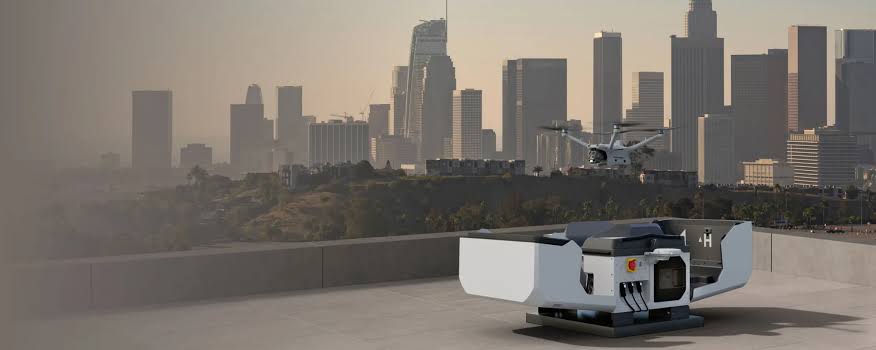
Industrial fire response drones give incident commanders thermal and high-zoom visual intelligence from a safe stand-off position during hazardous-material, refinery, tanker and container-yard fires. Aerosmart supplies DJI Matrice 400 and Matrice 4T platforms with Zenmuse H30T thermal payloads to fire services and industrial operators across Kenya, Nigeria, Ghana, Egypt, Tanzania and Zambia.
Not every fire is a building fire or a bush fire. Africa's industrial base — refinery and petrochemical complexes around Lagos and the Suez industrial zone, LPG distribution depots serving Nairobi, Accra and Dar es Salaam, paint and solvent manufacturing plants across national industrial estates, and licensed explosive-storage areas on the Zambian Copperbelt — creates fire scenarios in which close-proximity assessment exposes response personnel to unacceptable risk.
Aerosmart's specialist firefighting drone solutions serve incidents where personnel stand-off is a critical safety requirement. A thermal platform collects fire-seat temperature, smoke-plume direction and adjacent-tank thermal loading from positions ground crews cannot safely occupy, giving incident commanders the information they need to plan containment, evacuation and suppression.
A chemical-storage fire, fuel-depot incident, refinery leak ignition or agrochemical-warehouse fire requires responders to hold a controlled exclusion zone until the materials involved, the fire extent and the risk of explosion or secondary release have been assessed. Without aerial intelligence, that assessment is made from the perimeter on limited visual information.
A thermal drone operating above the incident perimeter delivers a clear view of the fire seat, smoke-plume direction, adjacent storage at risk and thermal loading on nearby tanks, structures and equipment. The data is collected from a safe aerial position, with no personnel inside the exclusion zone during the initial assessment.
For industrial and chemical-fire incidents across industrial zones in Nigeria, Egypt, Kenya, Ghana and South Africa, the DJI Matrice 400 paired with the Zenmuse H30T delivers thermal, zoom and laser-ranging intelligence from a controlled stand-off position. Incident commanders use the live aerial view to inspect storage areas, surrounding structures, access routes and potential escalation hazards.
The payload's laser-ranging capability lets teams reference and communicate the exact positions of storage tanks showing elevated thermal loading, isolation valves, damaged infrastructure and other features relevant to the containment strategy. Operating distance and measurement performance vary with visibility, weather, flight restrictions and site conditions.
Africa's road-freight network moves fuel and chemicals along corridors such as the Northern Corridor from Mombasa to Kampala and Nigeria's Lagos–Kano haulage route, creating vehicle-fire incidents in which the burning vehicle and its cargo present separate hazards. Before crews approach, responders must establish what is burning, how the fire is spreading and whether compressed gas, fuel, chemicals or other hazardous cargo is involved.
A fuel-tanker fire, chemical-carrier incident or heavy-goods-vehicle fire demands the same controlled stand-off assessment used at a fixed industrial facility. The DJI Matrice 4T deploys from a response vehicle within minutes, providing an initial overhead thermal and visual assessment before personnel move closer to the incident.
Mombasa, Apapa and Tin Can Island in Lagos, Tema, Durban and Dar es Salaam handle containerised cargo that includes explosives, compressed gases, flammable liquids, toxic substances and other regulated materials. During a container-yard or vessel fire, incident commanders must identify markings, evaluate adjacent container temperatures and read the surrounding yard or deck layout without exposing personnel to unknown secondary hazards.
Aerial thermal and high-zoom imaging supports placard and container identification, thermal-loading assessment and incident-area mapping from a stand-off position, so port and maritime fire teams make informed deployment decisions before committing personnel to higher-risk areas.
Mining operations across the Zambian Copperbelt, Ghana's gold belt and South Africa's Witwatersrand hold licensed explosive magazines, bulk fuel bays and processing plants where a fire carries secondary-detonation risk. Aerial thermal assessment establishes the fire's proximity to a magazine, the thermal loading on adjacent stores and the viable approach routes before any crew commits — the same stand-off principle applied to a site where the consequence of misjudgement is an explosion rather than a spread.
Aerosmart supplies the same Matrice 400 and Zenmuse H30T configuration to mine safety teams already operating drones for mining survey and mining site safety, so a single platform serves both routine and emergency roles.
Complex industrial-fire incidents involve the fire service, hazardous-material teams, plant emergency personnel, health agencies and environmental authorities at the same time. DJI FlightHub 2 shares the live aerial intelligence picture with authorised commanders, so multiple agencies view the same thermal and visual feed in real time and coordinate decisions from different positions around the incident perimeter. Flight planning and payload control run through DJI Pilot 2 on the ground station, available with the full DJI software and accessories range.
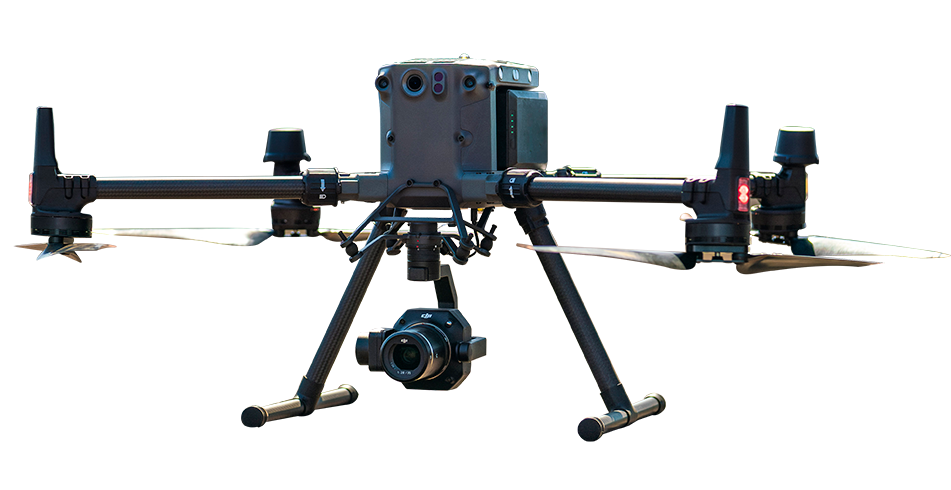
DJI Matrice 400 with Zenmuse H30T — major incidents. Extended endurance, thermal imaging, high-zoom placard identification and laser-assisted measurement from a planned command position. Suited to refinery, petrochemical, port and large industrial fires where the incident runs for hours and the command picture must be maintained continuously.
DJI Matrice 4T — rapid response. Compact, carried on the appliance and airborne within minutes of arrival. Suited to vehicle fires, tanker incidents, transport emergencies and smaller industrial fires where the priority is an immediate overhead assessment rather than sustained coverage.
Most African fire services and industrial operators run both: the Matrice 4T as the rapid-response platform and the Matrice 400 as the command-level asset for major incidents. Aerosmart advises on the configuration that matches your response profile before purchase. The full range is available on the enterprise drones page.
Step 1 — Establish the stand-off position. The incident commander sets the exclusion zone. The drone launches from outside it, upwind of the plume where possible.
Step 2 — Overhead thermal sweep. An initial pass identifies the fire seat, the direction and behaviour of the smoke plume, and any adjacent structures or tanks showing elevated thermal loading.
Step 3 — Hazard identification. Optical zoom is used to read hazard placards, container markings and vehicle signage, establishing the material classes involved without approaching.
Step 4 — Reference and measure. Laser ranging fixes the positions of isolation valves, tank shells, access routes and damaged infrastructure so they can be communicated precisely to crews on the ground.
Step 5 — Share the picture. The live feed is distributed through FlightHub 2 so fire, hazmat, plant and environmental commanders work from the same intelligence.
Step 6 — Monitor through suppression. Repeat thermal passes track cooling progress, confirm hot spots are resolved and support the decision to reduce the exclusion zone.
Fire and emergency operations frequently require night flight, extended visual range or access to restricted airspace — none of which fall under standard commercial RPAS permissions. Approvals should be secured in advance rather than at the point of an incident.
Kenya — KCAA Category B or C approval applies to public-safety operations, and night flight requires specific authorisation. Full requirements are set out on our drone regulations in Kenya page.
Nigeria — NCAA provisions govern emergency and public-safety flights alongside standard operator certification. Full requirements are set out on our drone regulations in Nigeria page.
Ghana — the GCAA operates a public-safety operator pathway distinct from commercial approval. Full requirements are set out on our drone regulations in Ghana page.
Aerosmart provides a country-specific regulatory brief covering emergency and public-safety operating categories with every purchase, and Aerosmart Academy delivers operator certification training aligned to each authority's requirements. We support fire response and industrial safety teams across Kenya, Nigeria, Ghana, Egypt, Tanzania and Zambia.
DJI enterprise drones give hazardous-material and industrial-fire incident commanders real-time thermal and high-zoom visual intelligence from a safe aerial position. They identify the seat of a fire, monitor thermal loading on nearby storage tanks and structures, track smoke-plume direction and assess surrounding hazards without requiring personnel to enter the exclusion zone during the initial assessment.
Drones equipped with a high-zoom payload such as the Zenmuse H30T inspect hazardous-material placards, identification labels and container markings from stand-off distance. This lets response teams establish the class of hazardous cargo involved without approaching a burning vehicle, storage tank or shipping container before the immediate risks have been assessed.
The DJI Matrice 400 with the Zenmuse H30T suits major industrial incidents requiring extended endurance, thermal inspection, high-zoom identification and laser-assisted measurement. For rapid initial assessment of vehicle fires, transport incidents and smaller industrial emergencies, the DJI Matrice 4T provides a compact, quickly deployable thermal response platform. Platform selection should reflect the incident type, operating environment and applicable aviation regulations.
Industrial fire assessment requires a thermal sensor able to resolve temperature differences across tank walls and structures at stand-off distance, combined with optical zoom sufficient to read hazard placards and container markings. The Zenmuse H30T pairs a high-resolution thermal sensor with optical zoom and a laser rangefinder, so a single flight delivers thermal loading data and visual identification without repositioning closer to the incident.
Night operations require specific authorisation in most African jurisdictions and are not covered by a standard commercial RPAS permission. In Kenya the KCAA authorises night flight separately from a standard operating approval, and Nigeria's NCAA and Ghana's GCAA apply comparable provisions. Fire services and industrial operators should secure night and emergency-operations approval in advance rather than at the point of an incident.
Safe stand-off distance depends on tank size, product, wind, plume behaviour and the risk of boilover or vapour-cloud explosion, and is set by the incident commander rather than by the aircraft. The operational value of an aerial platform is that thermal and zoom payloads gather usable detail from well outside the exclusion zone already established, so the drone works within existing safety distances rather than reducing them.
Yes. Public-safety and commercial drone operations require operator certification and pilot licensing in every African market Aerosmart serves — a Remote Air Operator Certificate and Remote Pilot Licence in Kenya, with equivalent frameworks under Nigeria's NCAA and Ghana's GCAA. Emergency operations involving night flight or restricted airspace need additional authorisation. Aerosmart Academy delivers training aligned to each authority's requirements.
The DJI Matrice 4T is built for rapid deployment from a response vehicle and can be airborne within minutes of arrival, giving crews an overhead thermal and visual picture before they approach. Realistic deployment time depends on crew training, pre-flight checks and whether the platform is carried ready-configured on the appliance.
Related public safety solutions: Urban Fires · Wildfires · First Response · Search and Rescue · Disaster Prevention and Response. Explore the full public safety drone range, or arrange servicing and maintenance for an existing fleet.

Fill in your details below and our team will get back to you with a personalised quote.