

Electrical substations are the nodes where Africa's power grid concentrates its highest density of critical electrical equipment transformers, circuit breakers, busbars, disconnecting switches, capacitor banks, and the protection and control systems that route power through the grid safely. A failure at a key substation does not simply interrupt supply to the lines directly connected to it it can cascade through the interconnected grid, collapsing supply to entire regions in a single event.
Substation inspection in Africa faces the same fundamental constraint as all high-voltage electrical infrastructure inspection the dangerous electromagnetic and electrical environment that the energised equipment creates around itself means inspection personnel must maintain safe clearance distances from live equipment, and many substation faults develop on equipment surfaces and in electrical connections that are elevated well above the ground level where safe visual inspection from ground clearance distances produces limited resolution images at acute viewing angles.
DJI enterprise drones inspect substation equipment from the optimal angle, at the closest resolution that thermal and zoom imaging quality demands, without inspection personnel entering the live equipment safety exclusion zone.
Africa's power substations range from the large 400 kV national grid interconnection substations operated by national transmission companies ETH Transmission in Ethiopia, KETRACO in Kenya, TCN in Nigeria, GRIDCo in Ghana to the hundreds of distribution-voltage substations that serve local supply areas across each country's distribution network. Both categories require regular inspection, but for different reasons.
High-voltage transmission substations contain equipment whose replacement cost is enormous, whose lead time is measured in months, and whose failure consequence regional grid collapse justifies a very high inspection frequency and a very thorough inspection protocol. Distribution substations fail more frequently, affect smaller areas when they do, but are so numerous that the aggregate inspection workload is enormous and the maintenance crew required to ground-survey every unit regularly exceeds available staffing.
Drone inspection addresses both ends of this challenge providing the thorough, close-range, multi-sensor inspection that high-value transmission substations require, and the rapid, scalable daily inspection coverage that distribution substation networks need across large geographic areas.
The most critical function of substation drone inspection is thermal identifying the equipment surfaces, connection points, and electrical components where abnormal operating temperature indicates a developing fault before that fault produces equipment failure and outage.
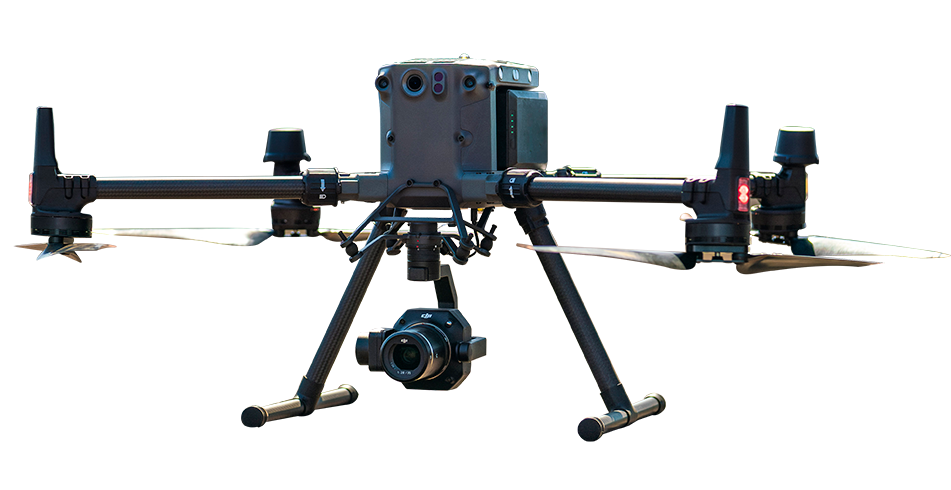
The DJI Matrice 400 with Zenmuse H30T provides the combination of thermal resolution, zoom capability, and flight endurance that thorough large substation thermal inspection requires. The H30T's 1280×1024 thermal camera resolves fine temperature differentials across transformer surfaces, busbar connections, circuit breaker terminals, and capacitor bank elements the 5–10°C anomaly that indicates a developing connection fault is clearly visible in the H30T thermal image at the operating altitude and standoff that keeps the aircraft safely outside the high-voltage exclusion zone.
The H30T's 34× optical zoom simultaneously captures the visual condition of every inspected component corrosion on connection hardware, cracking on insulator surfaces, oil staining on transformer bushings, and the structural condition of support steelwork at the resolution that maintenance condition grading requires for formal inspection records.
The Matrice 400's 59-minute flight time covers a complete large transmission substation all transformer bays, all busbar structures, all protection equipment panels, all circuit breaker positions in a single sortie without requiring battery change or mission interruption during the inspection pass.
For distribution utility inspection teams covering multiple distribution substations in a single working day the Matrice 30T's two-minute deployment capability, IP55 weather protection, and integrated thermal-zoom-laser sensor system provides the rapid, repeatable, portable substation inspection capability that high-volume distribution network inspection programmes require.
A trained Matrice 30T inspection pilot working from a standard utility vehicle covers four to six distribution substations per day thermal inspection of all equipment in each yard, visual condition documentation of all major components, and GPS-referenced defect location recording in the inspection data management system. The waypoint mission recorded at the first inspection of each substation is replayed on every subsequent visit consistent coverage, consistent angles, consistent documentation standard regardless of which pilot conducts the inspection.
For priority substations where continuous monitoring between formal inspection cycles is justified by the criticality of the equipment the DJI Dock 3 positioned within the substation perimeter enables scheduled thermal patrol of the complete equipment yard at whatever frequency the monitoring programme requires. Daily morning thermal checks of all transformer and busbar equipment identify the developing thermal anomaly before it reaches the failure threshold that inspection-interval monitoring might miss.
Pre-Inspection: Record waypoint inspection route covering all equipment bays, transformer positions, busbar structures, and protection panels. Define inspection altitude and standoff distance for each equipment section that maintains safe high-voltage clearance.
Thermal Inspection: Aircraft follows recorded route, capturing simultaneous thermal and visual imagery of all equipment positions. Radiometric thermal data records absolute temperatures at defined measurement points on each component.
Defect Identification: Review thermal and visual imagery in DJI FlightHub 2 or preferred asset management system. Flag thermal anomalies above defined temperature threshold for maintenance follow-up. Document visual condition findings with reference image and GPS location.
Reporting: Generate formal inspection report with thermal images showing anomaly locations, measured temperatures at fault points, visual condition images, and maintenance recommendations graded by urgency.
DJI enterprise drones equipped with thermal and zoom cameras can inspect substation equipment from a controlled aerial distance. These inspections can help identify abnormal heat patterns on transformer connections, busbar joints, circuit-breaker terminals and capacitor banks, while high-resolution zoom imagery documents corrosion, surface damage and other visible equipment conditions.
Yes. A thermal payload such as the Zenmuse H30T can help identify unusual temperature differences on transformer surfaces, bushings, electrical connections and cooling system components. These thermal anomalies may indicate increased connection resistance, cooling problems or other developing equipment issues. Findings should be reviewed and confirmed by qualified electrical maintenance personnel before corrective action is taken.
The DJI Matrice 400 equipped with the Zenmuse H30T is suitable for detailed thermal and visual inspection of large transmission substations. The DJI Matrice 30T is a compact option for rapid inspection of distribution substations and multi-site daily inspection programmes. The final platform should be selected according to site size, required image detail, operating conditions and inspection frequency.

Fill in your details below and our team will get back to you
with a personalised quote.