
Industrial inspection has always carried an uncomfortable trade-off. Inspect thoroughly and you send people onto structures, into confined spaces, up towers, and alongside live equipment—accepting the injury risk that working at height and in hazardous proximity creates. Inspect conservatively and you accept that faults develop undetected between inspection cycles until they announce themselves as failures.
Drone-based industrial inspection removes that trade-off. The aircraft goes where the inspector cannot safely go, sees what ground-level observation cannot resolve, and returns with thermal and visual data at a detail level that hands-on inspection frequently does not achieve. Nobody climbs. Nothing shuts down. And the inspection happens at a frequency that budget and safety previously made impossible.
Across the African markets aerosmart serves, that shift matters more than in most regions. Industrial infrastructure is expanding rapidly—refineries, power generation, processing plants, telecommunications towers, water treatment facilities, and the manufacturing base growing across East and West Africa. Inspection capacity has not expanded at the same rate. Drone inspection is how the gap closes.
Aerosmart supplies, configures and supports the complete DJI enterprise inspection ecosystem across 14+ African countries—platforms, thermal and zoom payloads, autonomous docks, processing software, and the operator training that turns equipment into inspection capability.
Platforms, payloads and capability at a glance.
| Specification | Detail |
|---|---|
| Primary Platforms | Matrice 400 · Matrice 350 RTK · Matrice 30T · Matrice 4T |
| Autonomous Systems | DJI Dock 3 · DJI Dock 2 |
| Thermal Payloads | Zenmuse H30T · Zenmuse H20T · Zenmuse H20N |
| Zoom Capability | Up to 34× optical · 400× digital (H30 Series) |
| Thermal Resolution | Up to 1280 × 1024 (H30T) |
| Laser Rangefinder | Up to 3,000 m (H30 Series) |
| LiDAR Payloads | Zenmuse L2 · Zenmuse L3 |
| Illumination | Zenmuse S1 LEP spotlight · 500 m range |
| Flight Endurance | Up to 59 minutes (Matrice 400) |
| Environmental Rating | IP55 dust and water protection |
| Operating Temperature | −20°C to 50°C |
| Transmission Range | Up to 40 km (O4 Enterprise Enhanced) |
| Software | DJI Pilot 2 · FlightHub 2 · DJI Terra |
| Deployment Markets | 14+ African countries |
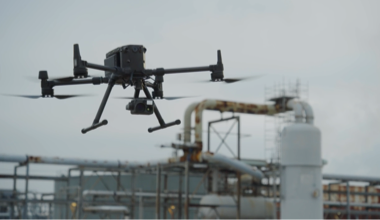
The assumption that physical access produces better inspection data than aerial observation does not survive contact with the specifications. A thermal camera at 1280×1024 resolution resolves temperature differentials across an entire equipment array simultaneously—differentials that a handheld thermal camera at close range identifies one component at a time, if the inspector thinks to point it at that component.
A 34× optical zoom camera images a connector at the top of a 60-metre structure at a detail level that an inspector standing at the base cannot see and a rope-access technician hanging beside it can see only for the components within arm's reach. The drone covers the entire structure at that detail level in one flight.
The laser rangefinder tags the precise GPS coordinate of every identified defect. The maintenance crew navigates directly to the fault rather than searching the structure for the anomaly the inspection report described. That single capability—turning a written observation into a coordinate removes a substantial portion of the follow-up time that inspection findings normally consume.
Most industrial equipment failures announce themselves thermally before they announce themselves mechanically. A connection developing resistance runs hot. A bearing beginning to fail runs hot. An insulation breakdown running toward flashover runs hot. Refractory damage inside a fired heater shows as a hot spot on the shell. A blocked cooling circuit shows as a thermal gradient where the flow stopped.
None of these are visible. All of them are detectable—if something is looking at the right time with the right sensor.
The Zenmuse H30T carries a 1280×1024 radiometric thermal camera that measures absolute temperature at any point in the image, not just relative brightness. An inspection flight produces temperature values, not thermal impressions—meaning the finding is quantified, comparable against the previous inspection, and defensible in a maintenance prioritisation discussion where competing budget claims require evidence.
For African industrial operators managing ageing infrastructure with constrained maintenance budgets, thermal inspection is the mechanism that directs limited maintenance resource to the equipment that actually needs it rather than to the equipment whose scheduled interval happens to have arrived.
The economics that limit inspection frequency are almost entirely deployment costs: travel, crew time, access arrangements, and the coordination effort each inspection visit requires. The inspection itself takes an hour. Getting the team to the site takes a day.
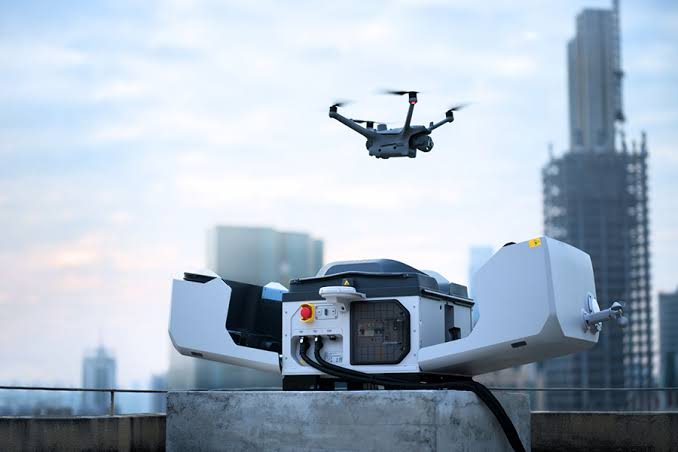
DJI Dock 3 removes that cost from routine inspection entirely. Installed at the facility, DJI Dock 3 launches the aircraft on schedule, executes the preplanned inspection route, returns, charges, and uploads the data to DJI FlightHub 2 automatically. No crew travels. No access is arranged. No coordination occurs.
The inspection interval becomes a scheduling decision rather than a budget decision. Daily thermal monitoring of a substation, weekly structural documentation of a processing unit, or nightly perimeter and equipment checks become operationally routine because the marginal cost of each additional inspection is close to zero once the Dock is installed.
For remote African industrial sites—such as inland processing facilities, isolated pumping stations, and the infrastructure positioned where the resource is rather than where the workforce is—autonomous inspection is the difference between monitored and unmonitored.
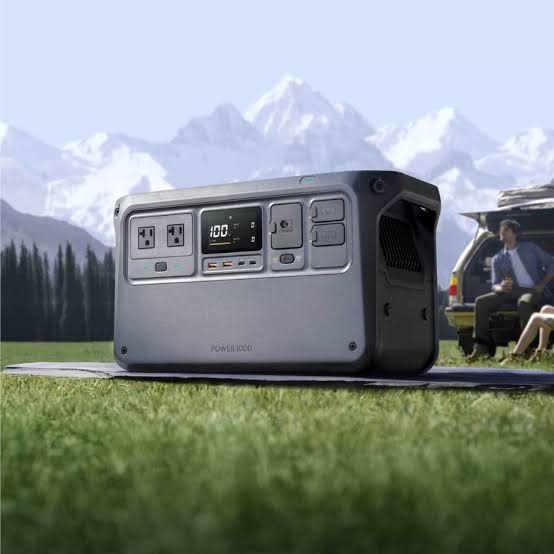
01 — Genuine Product, Zero Grey-Market Risk: Every platform and payload carries original DJI warranty, current firmware certification and regulatory-compliant documentation for aviation authority registration.
02 — Delivery Across 14+ Countries: Direct shipping is available with complete export documentation and import duty guidance for each destination market.
03 — Regulatory Guidance Included: Country-specific written RPAS regulatory guidance covers operator certification, equipment registration and the industrial site airspace considerations involved in facility operations.
04 — Inspection-Specific Configuration Consultation: Payload selection is matched to the inspection requirement, including thermal resolution for the fault classes being detected, zoom reach for the required standoff distance and platform endurance for the scale of the facility.
05 — Post-Sale Support and Servicing: Aerosmart's Dubai-based repair, maintenance and remote diagnostics team is available to support clients across every African market served.
06 — Inspection Operations Training: Aerosmart Academy provides training in thermal anomaly identification, radiometric measurement techniques, defect geolocation, inspection mission planning and report production.
07 — Complete Programme Configuration: The platform, payload, autonomous Dock, processing software and training are supplied and configured as one complete inspection programme rather than as separate purchases.
Industrial inspection data can document asset condition, operational vulnerabilities and, in energy-sector applications, information relating to infrastructure of national significance.
DJI enterprise platforms support security features including Media Data Encryption, Local Data Mode, One-Tap Clear Logs and AES-256 transmission encryption.
Local Data Mode can disable internet connectivity during flight, helping operators maintain tighter control over mission data and device communication during sensitive inspection operations.
FlightHub 2 Private Deployment can route inspection data through operator-controlled infrastructure, supporting the data-residency requirements increasingly specified by energy operators, utilities and government-linked industrial organisations across African markets.
Every DJI enterprise inspection platform purchased through Aerosmart comes with access to DJI Care Enterprise Plus from the date of activation.
Aerosmart also supports the activation and warranty claim process directly, helping customers avoid unnecessary overseas routing and third-party intermediaries.
Free Repairs: Unlimited eligible repairs within the available coverage limit.
Battery Replacement: One eligible battery replacement per year to help maintain consistent operational runtime.
Whole Fleet Coverage: A shared coverage limit can be applied across eligible aircraft in the same fleet, subject to the applicable DJI Care terms.
Free Two-Way Shipping: Supported mail-in service can simplify the repair and return process.
Expert Service: Rapid technical support from trained DJI service professionals.
Full Device Coverage: Ongoing support for eligible aircraft and covered components across operational deployments.
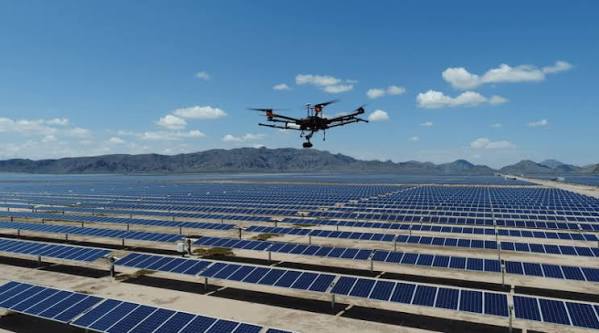
Industrial inspection drones support thermal and visual inspection of power-generation and transmission infrastructure, oil and gas facilities, telecommunications towers, water-treatment plants, manufacturing facilities and renewable-energy installations. They help identify faults from a safe aerial stand-off distance without requiring personnel to access hazardous structures or the plant to shut down.
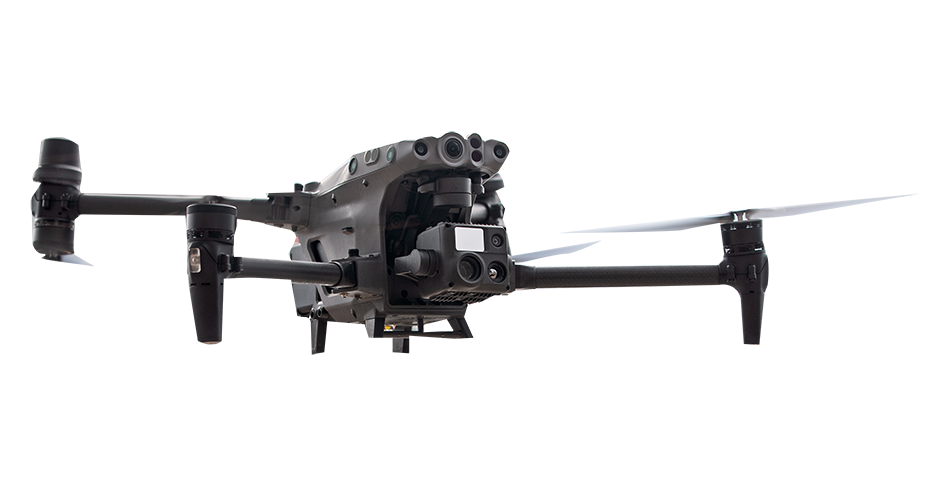
The DJI Matrice 400 with the Zenmuse H30T is a leading configuration for demanding industrial inspections, combining up to 59 minutes of flight endurance, a 1280 × 1024 thermal camera, 34× optical zoom and laser rangefinding up to 3,000 metres. The DJI Matrice 30T is well suited to routine inspection programmes requiring rapid deployment across multiple sites.
Yes. Aerial inspection is non-contact and non-intrusive, so inspections can be conducted while the plant remains in operation. Thermal inspection is often most effective when equipment is operating at its normal load and temperature, allowing developing faults and abnormal heat patterns to be detected more clearly.
Yes. Radiometric thermal cameras measure absolute temperature at selected points within the image. This helps inspectors identify abnormal temperature differences at electrical connections, busbars, terminals, transformer components and equipment surfaces that may indicate a developing fault.
A DJI Dock 3 installed at the facility can launch the aircraft on a scheduled inspection route without on-site flight personnel. The aircraft completes the pre-planned mission, returns to the Dock, recharges and uploads the inspection data to DJI FlightHub 2 automatically.
Yes. Aerosmart Academy provides Industrial Inspection Operations training covering thermal-anomaly identification, radiometric measurement, defect geolocation, mission planning and inspection-report production. Training can be delivered on-site across supported African markets or through the Nairobi Academy.
Aerosmart supplies industrial inspection drone solutions across more than 14 African markets, including Kenya, Nigeria, Ethiopia, Ghana, Tanzania, Uganda, Rwanda, Zambia, Mozambique, Angola, Egypt, Morocco, Senegal and Ivory Coast.
The cost depends on the aircraft platform, payload configuration, software, training requirements and whether autonomous DJI Dock infrastructure is included. For a configuration and quotation matched to your inspection requirements, contact Aerosmart at sales@aerosmartglobal.com .

Complete the form below and our drone solutions specialists will contact you with a customised recommendation and quotation based on your operational requirements.